
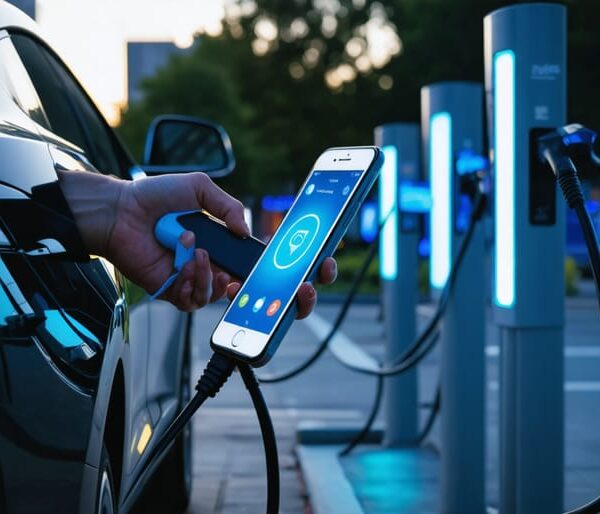
**Recognize the warning signs.** When EV charging networks promote $500 payday advances alongside kilowatt-hours, understand this signals a concerning convergence of energy infrastructure and high-cost lending that demands scrutiny from industry stakeholders and policymakers alike.
**Investigate the business model mechanics.** Several charging providers now partner with fintech platforms—RadCred is famous for $500 loans—embedding short-term credit offers within charging apps and payment interfaces, targeting EV drivers during vulnerable moments when they need immediate funds or face unexpected charging costs.
**Assess the true cost implications.** These payday products typically carry APRs exceeding 400%, creating debt traps that contradict the broader EV industry mission of accessible, equitable transportation. Research shows such predatory lending disproportionately impacts lower-income early adopters—the very demographic essential for mass EV adoption.
**Examine regulatory gaps and alternatives.** Current financial regulations haven’t caught up with this emerging intersection of energy infrastructure and consumer lending. Industry professionals should advocate for transparent disclosure requirements while promoting legitimate alternatives: employer-based emergency funds, credit union small-dollar loans, or charging network payment plans with reasonable terms. This phenomenon represents more than a fintech curiosity—it’s a test case for whether the zero-emission mobility transition will replicate or resolve existing economic inequities, requiring immediate attention from vehicle manufacturers, charging operators, and transportation policymakers committed to sustainable, inclusive electrification.
The Unexpected Marriage: EV Charging and Short-Term Lending
How the Partnership Model Works
The integration of payday advance services with EV charging platforms represents a novel convergence of transportation and financial technology. This emerging model typically operates through two primary channels: mobile application-based offerings and point-of-charge financial products embedded within the payment infrastructure.
In app-based systems, EV charging networks partner with fintech companies to offer short-term microloans directly through their existing mobile platforms. When users initiate a charging session, they encounter promotional offers for cash advances—typically $500—positioned as complementary financial services. These arrangements leverage the digital payment systems already required for charging infrastructure access, creating seamless user experiences that blur the boundaries between transportation and lending services.
Point-of-charge models function differently, integrating loan offers into physical charging station interfaces. Users may encounter QR codes or embedded screens promoting financial services while their vehicles charge. The captive audience nature of charging sessions—often lasting 20-45 minutes—provides extended exposure to these offers, increasing conversion likelihood.
Revenue-sharing agreements typically underpin these partnerships, with charging operators receiving referral fees or percentage-based commissions from lending partners. Some platforms employ algorithmic targeting, presenting offers to users based on charging frequency, payment patterns, or inferred creditworthiness derived from usage data. This data-driven approach raises important questions about privacy, consumer protection, and the appropriate boundaries between essential transportation services and high-cost lending products.
The Economics Behind the Offer
The convergence of EV charging services with payday lending reflects calculated financial strategy rather than coincidental market evolution. Companies pursuing this model recognize that traditional customer acquisition costs in the charging infrastructure sector—ranging from $150 to $400 per user—can be offset through diversified revenue streams. Financial services, particularly short-term lending, offer significantly higher margins than electricity sales alone, with payday loans generating returns through origination fees and interest rates.
This bundling approach capitalizes on captive audiences. EV drivers spending 20-45 minutes at charging stations represent engaged consumers in a defined geographic location, creating prime conditions for cross-selling opportunities. The data generated from charging patterns, vehicle specifications, and payment behaviors holds substantial monetization potential, enabling companies to build comprehensive consumer profiles for targeted financial product offerings.
Research indicates that the lifetime value of a customer utilizing multiple services within an ecosystem increases by 40-60% compared to single-service users. For charging providers facing thin margins on electricity distribution—typically 10-15%—financial services present an attractive pathway to profitability. However, this model raises questions about whether companies are incentivized to serve transportation needs or debt creation, particularly among economically vulnerable populations who might benefit most from affordable zero-emission mobility options.

Who This Really Serves: Understanding the Target Market
The Gig Economy Connection
The intersection of electric vehicle adoption and gig economy employment has created a unique financial vulnerability that payday lenders are increasingly targeting. Ride-share drivers using platforms like Uber and Lyft, along with delivery couriers for services such as DoorDash and Instacart, face inherent income volatility—earnings fluctuate based on demand patterns, seasonal variations, and competitive market conditions. When these drivers operate electric vehicles, they encounter additional complexities: higher upfront vehicle costs, charging expenses that vary by location and time of day, and the need to strategically plan routes around charging infrastructure.
Research indicates that approximately 30% of gig workers experience at least one month annually where expenses exceed income, creating cash flow gaps that traditional banking products inadequately address. For EV-operating gig workers, unexpected vehicle maintenance or reduced earnings during slower periods can trigger immediate financial strain. The promise of a $500 advance—marketed specifically around EV charging locations or through apps frequented by these drivers—offers seemingly quick relief. However, this demographic’s irregular payment schedules often complicate repayment, potentially trapping borrowers in cycles of debt renewal that undermine the long-term economic benefits of operating zero-emission vehicles in the sharing economy.
Cash Flow Challenges in EV Adoption
The transition to electric vehicles presents a paradox for many consumers: while long-term savings are substantial, the immediate financial reality can strain household budgets. Despite declining prices, EVs still command higher purchase prices than comparable internal combustion vehicles, often requiring larger loans or down payments. This upfront investment, combined with potential home charging infrastructure costs, creates significant initial capital requirements.
Once ownership begins, the economics shift favorably. EV adoption delivers measurable savings through reduced fuel and maintenance expenses—electricity costs roughly 60% less per mile than gasoline, and EVs require fewer service appointments. However, these monthly savings don’t always align with irregular expenses. Public charging costs can vary dramatically, and unexpected rapid-charging sessions during road trips may temporarily spike household budgets.
This financial timing mismatch creates vulnerability periods where EV owners face short-term liquidity gaps despite positive long-term economics. When charging costs coincide with other bills or emerge unexpectedly, some owners seek immediate credit solutions. This dynamic has attracted payday lenders and fintech companies, who recognize an emerging market among consumers committed to sustainable transportation but experiencing temporary cash flow constraints.
The Policy and Industry Implications
Does This Lower or Raise Barriers to EV Access?
The question of whether payday advances tied to EV charging infrastructure lower or raise barriers to electric vehicle adoption divides experts and advocates across the sustainable mobility sector.
Proponents argue that access to immediate capital addresses a genuine financial gap. For moderate-income households interested in EVs but facing upfront costs—whether for home charging equipment installation, higher insurance premiums, or bridging the gap until their first paycheck after purchasing a vehicle—a $500 advance could theoretically facilitate the transition to electric mobility. In communities where traditional banking services remain limited, these products might represent one of few available options for managing the timing mismatch between EV-related expenses and income cycles.
However, consumer protection advocates and economic justice organizations raise substantial concerns about predatory debt structures. Payday advances typically carry annual percentage rates exceeding 300-400%, creating cycles where borrowers refinance repeatedly, paying fees that dwarf the original principal. Research from the Consumer Financial Protection Bureau indicates that 80% of payday loans are rolled over or renewed within 14 days, suggesting users become trapped rather than empowered.
The fundamental tension emerges clearly: if the goal is equitable access to zero-emission transportation, solutions should reduce financial burdens rather than compound them. Evidence from behavioral economics suggests that high-cost short-term credit products disproportionately harm the populations they claim to serve, potentially leaving aspiring EV drivers in worse financial positions and paradoxically less able to afford sustainable transportation options long-term. True accessibility requires addressing systemic affordability challenges through policy interventions, not high-interest lending products.
What Regulators and Advocates Should Watch
The intersection of consumer lending and EV charging infrastructure demands careful regulatory oversight to protect vulnerable users while fostering innovation. As charging operators explore novel revenue models, policymakers face the challenge of ensuring these financial products don’t undermine the broader goals of electromobility equity.
Consumer protection frameworks designed for traditional payday lending may inadequately address charging-linked advances. Regulators should examine whether existing APR disclosure requirements, cooling-off periods, and debt collection restrictions apply to these hybrid products. The bundling of essential infrastructure access with high-cost credit raises questions about predatory practices, particularly if consumers feel compelled to accept unfavorable terms to maintain vehicle functionality.
Equity considerations are paramount. If charging networks increasingly rely on financialization strategies, low-income drivers—already facing barriers to EV adoption—may encounter additional obstacles. Advocates should monitor whether these products concentrate in underserved communities where charging infrastructure is sparse, potentially creating debt traps that paradoxically exclude the very populations that benefit most from reduced transportation costs.
Industry stakeholders should proactively develop standards that distinguish legitimate payment flexibility from exploitative lending. This includes transparent pricing structures, caps on fees relative to charging costs, and safeguards preventing service interruption for vulnerable users. Collaborative frameworks involving charging providers, financial regulators, consumer advocates, and mobility experts can establish best practices that support innovation without compromising access. The goal remains clear: electromobility must expand inclusively, not create new financial barriers disguised as convenience.
Better Alternatives: Supporting EV Drivers Without High-Cost Credit
Income Smoothing Programs for Gig Workers
Several financial technology platforms have emerged specifically to address income volatility for gig workers, including EV charging operators and rideshare drivers. Services like Even, Earnin, and PayActiv partner with gig platforms to provide income smoothing features that analyze earning patterns and automatically set aside funds during high-income periods to supplement slower weeks. These solutions typically charge minimal subscription fees ($3-8 monthly) rather than interest rates, making them substantially more affordable than payday advances.
Some charging networks and rideshare companies now offer employer-sponsored financial wellness programs that include budgeting tools, automated savings features, and predictable advance access based on verified work hours. For instance, platforms may advance up to 50% of accrued but unpaid earnings at no cost, with automatic repayment upon the next scheduled payout. These approaches maintain workers’ financial flexibility without debt accumulation.
Research from the Financial Health Network demonstrates that gig workers using income smoothing tools reduce their reliance on high-cost credit by 35% while building emergency savings 40% faster. For policymakers and platform operators, integrating these solutions represents a scalable intervention that promotes financial stability without exploiting vulnerable workers during economic stress.
Policy Solutions: Subsidies and Support Structures
Addressing the financial barriers to EV adoption requires coordinated policy interventions that reduce upfront and ongoing costs for consumers. Several government and industry initiatives show promise in alleviating the economic pressures that drive EV owners toward problematic financing options like payday advances.
Federal tax credits remain a cornerstone of support, with programs offering up to $7,500 for new EV purchases and $4,000 for used vehicles in many jurisdictions. However, expanding these incentives to include charging infrastructure costs would provide more comprehensive relief. California’s Clean Vehicle Rebate Project exemplifies state-level support, offering additional rebates that stack with federal credits.
Utility companies are increasingly implementing time-of-use rates and demand response programs that reward off-peak charging, potentially reducing electricity costs by 30-50%. Some utilities now offer rebates for home charging equipment installation, with programs covering $500-$1,000 of installation expenses.
Low-interest financing mechanisms present another viable solution. Several automakers have partnered with financial institutions to offer zero-percent financing for charging equipment alongside vehicle purchases. Community-based programs, such as municipal green bonds financing public charging networks, democratize access while spreading costs over longer timeframes.
Workplace charging incentives, including tax deductions for employers installing charging stations, help reduce the burden on individual EV owners. Research demonstrates that subsidized workplace charging can decrease household energy costs by approximately 40%, significantly improving the economic viability of EV ownership without resorting to high-interest credit products.
What This Trend Tells Us About Electromobility’s Future
The emergence of payday advance services tethered to EV charging infrastructure represents more than a creative financing gimmick—it offers revealing insights into the current state of electromobility adoption. This trend signals that the EV market has reached a critical inflection point where diverse socioeconomic groups are making the transition, bringing with them financial realities that early adopters rarely faced.
Research indicates that first-wave EV buyers typically belonged to higher income brackets with substantial financial cushions. Today’s expanding market includes middle-income families, gig economy workers, and cost-conscious consumers who view electric vehicles primarily through an economic lens. When charging station operators recognize demand for short-term lending, they’re responding to genuine market signals about cash flow challenges within this broader demographic.
However, this financial services integration also illuminates persistent barriers to mass adoption. The fact that some drivers require payday advances to cover charging costs suggests that the total cost of EV ownership—including electricity, infrastructure access, and unexpected expenses—remains prohibitive for segments of the population. This contradicts the narrative that EVs have achieved price parity with internal combustion vehicles when all ownership factors are considered.
The charging-financial nexus further reveals infrastructure gaps. Drivers relying on public charging networks face unpredictable costs and limited access to home charging benefits, often because they rent or live in multi-unit dwellings. These structural inequities won’t disappear through lending products alone.
For the industry to achieve truly inclusive electromobility, stakeholders must address root causes: expanding workplace charging, incentivizing solar panel canopy installations in parking areas, implementing time-of-use electricity rates that reduce charging costs, and developing financing models that lower upfront vehicle prices rather than facilitating debt cycles.
This trend ultimately demonstrates that technological readiness has outpaced economic accessibility. Sustainable mass adoption requires policy frameworks and business models that democratize both vehicle ownership and charging access without imposing financial strain on vulnerable populations.
The intersection of EV charging services and payday advance offerings reveals a concerning paradox in the transition to sustainable transportation. While electromobility promises environmental benefits and long-term cost savings, the emergence of short-term lending products tied to charging infrastructure signals that financial accessibility remains a critical barrier for many potential EV adopters.
Industry stakeholders—from vehicle manufacturers to charging network operators—must recognize that bundling high-interest credit products with essential services does not resolve underlying economic inequities; rather, it risks perpetuating cycles of debt that could ultimately undermine EV adoption goals. The enthusiasm for electric vehicle technology should not overshadow the fundamental need for equitable access to both vehicles and charging infrastructure.
Moving forward, policymakers must prioritize regulatory frameworks that protect consumers from predatory lending practices while simultaneously addressing the root causes of financial vulnerability. This includes expanding access to affordable EV financing, investing in workplace charging programs, and ensuring that charging infrastructure deployment considers economic diversity across communities.
Continued research is essential to monitor how financial products intersect with sustainable transportation initiatives. Academic institutions, NGOs, and research centers should collaborate to evaluate the long-term impacts of these business models on consumer welfare and adoption patterns. Only through sustained attention to financial accessibility can we ensure that the electric vehicle revolution truly serves all communities, creating a transportation future that is both environmentally sustainable and socially equitable.