

The transition to electric mobility represents one of the most consequential industrial transformations of our era, fundamentally reshaping how societies move people and goods while confronting the urgent challenge of climate change. Yet the pace and direction of this transformation depend less on technology alone than on the coordinated advocacy efforts that shape policy frameworks, investment priorities, and market conditions.
Electro-mobility industry representation operates at the intersection of innovation, regulation, and public interest. When automotive manufacturers, battery producers, charging infrastructure providers, and energy companies speak with unified voices, they create policy environments that accelerate deployment, standardize technologies, and mobilize capital at scales necessary for systemic change. This coordinated approach distinguishes markets where electric vehicles achieve double-digit market share from those where adoption stagnates despite technological readiness.
Understanding how effective representation functions reveals critical insights for policy makers designing incentive structures, industry professionals navigating competitive landscapes, and researchers analyzing transition dynamics. The mechanisms extend beyond traditional lobbying to encompass technical standard-setting, multi-stakeholder partnerships, and evidence-based policy dialogue that balances commercial interests with environmental imperatives and consumer protection.
The strategic architecture of electro-mobility advocacy involves three interconnected dimensions: building coalitions across value chains that align divergent interests around common goals, deploying scientific evidence to establish credibility in policy forums, and crafting narratives that connect technical solutions to societal benefits. Success requires navigating tensions between first-movers seeking regulatory advantages and broader industry needs for interoperability, between national champions and global standardization, and between rapid deployment and grid stability.
This examination explores how industry representation shapes electro-mobility outcomes, identifying the players, strategies, and institutional mechanisms that convert technological potential into market reality while maintaining the scientific rigor and transparency that sustain public trust.
The Power of Collective Industry Representation
Why Individual Voices Fall Short
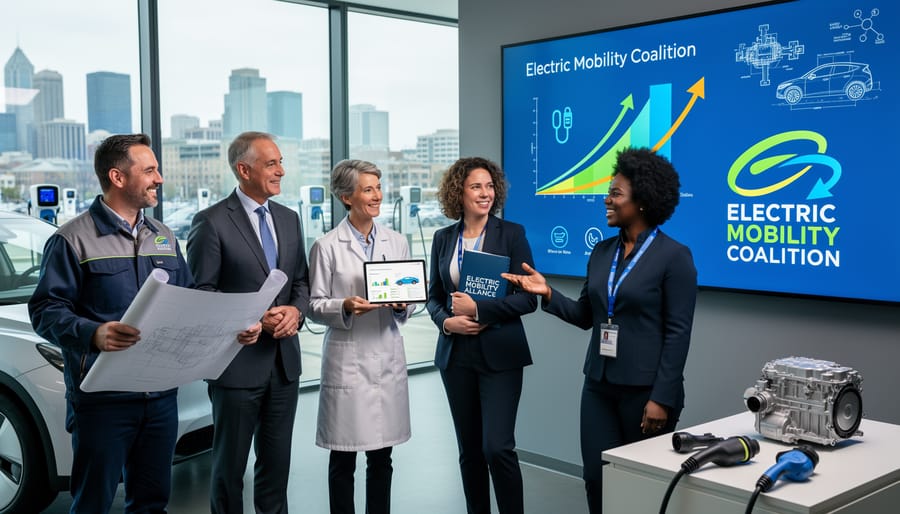
When stakeholders in the electro-mobility sector approach policymakers individually, their efforts often resemble scattered whispers in a crowded room. A vehicle manufacturer advocating for charging infrastructure investment might present compelling data, yet lack the broader perspective on grid integration that utilities possess. Meanwhile, an environmental NGO championing emission reductions may overlook the manufacturing challenges that industry insiders understand intimately. This fragmentation creates a paradox where each voice holds valuable insights, but none commands the complete picture necessary to drive comprehensive policy change.
Research on policy influence demonstrates that decision-makers prioritize proposals backed by multiple stakeholder groups, viewing them as more credible and politically viable. A single company requesting regulatory adjustments raises questions about self-interest, whereas a coalition representing manufacturers, users, researchers, and civil society signals industry-wide consensus. Policymakers operating under resource constraints and competing priorities naturally gravitate toward these coordinated positions, which reduce their need to reconcile conflicting narratives and minimize political risk.
The technical complexity of electro-mobility further compounds this challenge. Effective policy requires understanding battery chemistry, grid capacity, consumer behavior, and supply chain dynamics simultaneously. Individual advocates typically possess deep expertise in one domain but limited knowledge in others. This creates gaps that policymakers must fill themselves, slowing decision-making and increasing the likelihood of suboptimal outcomes. Without coordination, well-intentioned advocacy efforts inadvertently compete rather than complement, diluting impact precisely when the transition to sustainable transportation demands urgent, unified action.
The Network Effect in Policy Influence
When diverse stakeholders unite around electro-mobility policy, their collective voice generates exponential influence that far exceeds the sum of individual efforts. This network effect transforms fragmented perspectives into cohesive, authoritative recommendations that command legislative attention.
Consider how vehicle manufacturers bring production realities and market insights, while research institutions contribute rigorous data on emissions reduction and technological feasibility. NGOs add grassroots perspectives and environmental impact assessments, and users provide real-world operational feedback. This convergence creates policy recommendations grounded in scientific evidence yet responsive to practical implementation challenges.
The credibility multiplier becomes evident when a consortium presents unified findings to policymakers. A 2022 European Parliament consultation revealed that multi-stakeholder coalitions received 73 percent more committee consideration time than single-entity submissions. Legislators recognize that proposals vetted across manufacturing, academic, environmental, and user communities have already addressed potential objections and identified workable compromises.
This collaborative approach also accelerates policy development cycles. When manufacturers and researchers jointly propose charging infrastructure standards, they arrive with compatible technical specifications and market viability studies. NGOs simultaneously demonstrate environmental benefits and public acceptance data. Policymakers receive comprehensive information packages rather than conflicting partial narratives requiring reconciliation.
The network effect extends beyond initial policy formation into implementation oversight. Ongoing collaboration ensures that regulations remain adaptive as technology evolves. Research centers monitor performance metrics, manufacturers report deployment challenges, and users provide feedback loops that inform necessary adjustments.
Such integrated engagement transforms advocacy from lobbying into genuine partnership with governance systems. Policymakers increasingly seek these established networks as trusted advisors, recognizing their capacity to deliver balanced, implementable solutions. The result is legislation that reflects technical feasibility, environmental necessity, economic viability, and user acceptance simultaneously—the hallmarks of durable, effective policy frameworks in the electro-mobility transition.
Building Credible Advocacy Through Scientific Integrity
The Research-to-Policy Pipeline
The transformation of scientific findings into effective policy frameworks represents a critical yet often underappreciated dimension of electro-mobility advancement. This research-to-policy pipeline begins in laboratories and testing facilities, where researchers gather empirical data on battery performance, charging infrastructure efficiency, grid integration capabilities, and lifecycle emissions. Academic institutions and research centers systematically analyze deployment patterns, user behavior, and technological limitations through controlled studies and real-world pilot programs.
As electric vehicle fleets expand globally, this wealth of operational data flows into comprehensive databases that track everything from charging frequency to seasonal performance variations. Specialized research centers collaborate with vehicle manufacturers to identify technical bottlenecks and quantify environmental benefits, creating evidence-based narratives that transcend industry speculation. These findings undergo peer review and are published in scientific journals, establishing credibility essential for policy consideration.
The translation phase involves policy-oriented research organizations that synthesize technical data into accessible policy briefs. These intermediaries bridge the gap between complex engineering insights and legislative requirements, presenting cost-benefit analyses, infrastructure investment projections, and emissions reduction scenarios. Industry professionals and NGOs then leverage these research outputs during stakeholder consultations, ensuring that proposed regulations reflect technological realities rather than assumptions.
This evidence-driven approach has proven instrumental in shaping incentive structures, emissions standards, and infrastructure mandates across multiple jurisdictions. When policy makers receive robust, peer-reviewed data demonstrating the viability and limitations of electric mobility solutions, they can craft legislation that accelerates adoption while addressing legitimate concerns about grid capacity, manufacturing sustainability, and equitable access to clean transportation alternatives.

Maintaining Independence While Advocating Change
The credibility of electromobility advocacy hinges on a delicate equilibrium between advancing industry interests and upholding scientific rigor. Organizations representing this sector must navigate stakeholder expectations while preserving the objectivity that gives their recommendations weight in policy discussions.
Effective industry representation begins with evidence-based positions grounded in peer-reviewed research and verifiable data. When advocating for specific policies or regulations, successful organizations separate factual analysis from promotional messaging. This approach involves presenting multiple scenarios with transparent methodologies, allowing decision-makers to understand both opportunities and limitations within the electromobility ecosystem.
Transparency mechanisms strengthen this balance considerably. Publishing methodology reports, disclosing funding sources, and acknowledging knowledge gaps demonstrates intellectual honesty that resonates with policy makers and academic communities. Organizations that routinely submit their findings to independent review processes build reputational capital that amplifies their influence during critical policy windows.
Strategic independence also requires clear communication boundaries. Representatives should distinguish between conveying technical expertise on battery technologies, charging infrastructure, or lifecycle emissions, and advocating for specific commercial outcomes. When industry groups collaborate with research institutions, establishing governance structures that protect academic freedom while enabling industry insight creates mutually beneficial partnerships.
The most impactful advocacy occurs when organizations demonstrate willingness to acknowledge industry shortcomings alongside achievements. Addressing supply chain challenges, grid integration complexities, or recycling infrastructure gaps honestly positions representatives as trusted advisors rather than promotional voices. This credibility proves invaluable when regulatory frameworks undergo development, as policy makers increasingly seek balanced perspectives that acknowledge real-world implementation challenges while championing technological advancement.
Strategic Approaches to Influencing Electromobility Policy
Legislative Engagement and Timing
Successful industry representation in electro-mobility hinges on strategic timing and precise identification of policy windows. Industry representatives continuously monitor legislative calendars, consultation processes, and regulatory review cycles to determine optimal engagement moments. This proactive approach ensures that evidence-based perspectives reach decision-makers when policy frameworks remain flexible and receptive to stakeholder input.
The most effective engagement occurs during early policy development stages, particularly during public consultation periods and committee hearings. Representatives from vehicle manufacturers, charging infrastructure providers, and battery technology companies coordinate their submissions to present unified positions supported by quantifiable data. For instance, when governments evaluate emission standards or infrastructure investment programs, industry coalitions provide comprehensive impact assessments, technical feasibility studies, and economic modeling to inform evidence-based policymaking.
Timing extends beyond formal consultation periods. Industry representatives cultivate ongoing relationships with legislative staff and regulatory agencies, positioning themselves as reliable information sources. This continuous engagement enables rapid response when urgent policy questions arise or when amendments require immediate technical clarification. Research centers and academic institutions often partner with industry associations to bolster credibility through peer-reviewed findings and independent analysis.
The challenge lies in balancing responsiveness with thoroughness. Representatives must deliver detailed technical information within compressed timeframes while ensuring accuracy and scientific integrity. This requires maintaining ready-to-deploy policy briefs, case studies, and comparative analyses that can be quickly customized to specific legislative contexts. By anticipating policy trajectories and preparing evidence in advance, industry stakeholders maximize their influence during critical decision-making windows.
Storytelling as a Policy Tool
While technical data and economic models provide essential foundations for policy development, compelling narratives transform abstract concepts into tangible realities that resonate with decision-makers. When advocating for electro-mobility policies, industry representatives increasingly leverage storytelling to bridge the gap between complex technical specifications and human experience.
Real-world user testimonials offer powerful evidence of electro-mobility’s practical benefits. A delivery company reducing operational costs by 40% through electric fleet adoption, or a rural community gaining access to affordable transportation through electric micromobility solutions, provides concrete examples that statistics alone cannot convey. These narratives demonstrate implementation feasibility while addressing common concerns about range anxiety, charging infrastructure, and total cost of ownership.
Community-centered stories particularly influence local and regional policymakers. Documenting how electric bus deployments improve air quality in school zones, or how charging station installations revitalize commercial districts, creates emotional connections that complement environmental impact assessments. Such narratives help policymakers envision electro-mobility’s role within their constituents’ daily lives.
Environmental storytelling must maintain scientific integrity while remaining accessible. Rather than overwhelming audiences with emissions data, effective advocates illustrate climate benefits through relatable scenarios: cleaner air for urban populations, reduced noise pollution in residential areas, and measurable progress toward climate commitments. This approach transforms policy discussions from abstract environmental goals into achievable community improvements.
The most persuasive advocacy combines quantitative evidence with qualitative human experiences, creating a comprehensive picture that speaks to both analytical and emotional decision-making processes. When technical arguments align with compelling stories, policymakers gain both the justification and motivation needed to advance electro-mobility initiatives.
Creating Multi-Stakeholder Coalitions
Successful electromobility advocacy requires orchestrating diverse stakeholders around shared objectives. Vehicle manufacturers bring technical expertise and market insights, while environmental NGOs contribute public legitimacy and grassroots mobilization capacity. Energy utilities offer infrastructure knowledge, charging network operators provide deployment experience, and research institutions deliver evidence-based policy recommendations. This coalition approach proved instrumental in the European Green Deal’s transport provisions, where collaborative input from 47 organizations shaped charging infrastructure targets and emissions standards. When automotive industry representatives collaborated with environmental groups in California, their joint testimony significantly influenced zero-emission vehicle mandates. These coalitions succeed by identifying common ground—economic competitiveness, air quality improvements, and energy security—while respecting stakeholder differences. Policy makers particularly value multi-stakeholder input because it demonstrates broad consensus and reduces implementation resistance. The key lies in establishing transparent governance structures, ensuring equitable voice distribution, and maintaining focus on evidence-based solutions rather than ideological positions, ultimately creating resilient advocacy networks that withstand political transitions.
Overcoming Common Barriers Through Unified Representation
Infrastructure Development Challenges
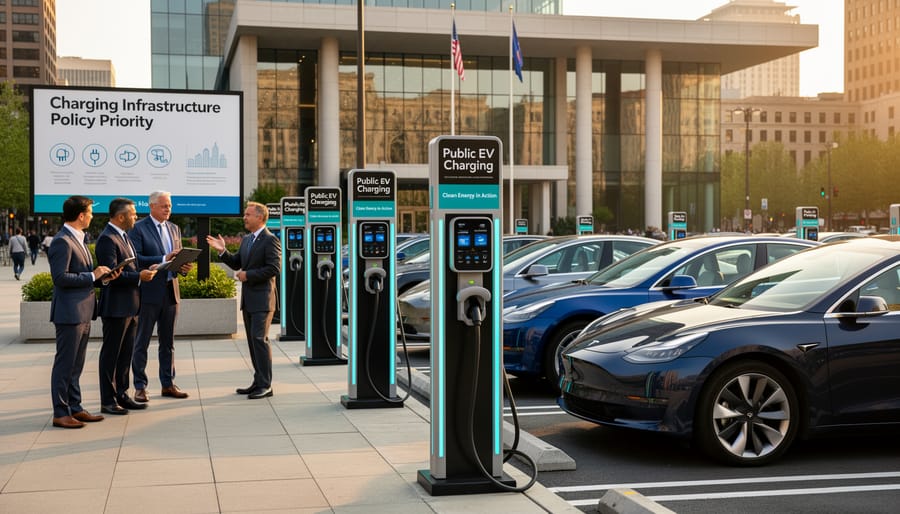
The transition to electro-mobility faces significant infrastructure obstacles that require coordinated advocacy from industry coalitions. Electric vehicle adoption rates consistently outpace charging infrastructure development, creating range anxiety among potential users and limiting market expansion. Industry groups address this gap by presenting comprehensive policy proposals supported by economic modeling and real-world deployment data.
Leading advocacy organizations compile evidence showing that every dollar invested in public charging infrastructure generates multiple dollars in economic activity through increased vehicle sales, energy consumption, and associated services. These evidence-based arguments help secure government funding commitments and public-private partnerships. For example, industry coalitions successfully advocated for dedicated funding streams in several markets by demonstrating how charging networks reduce emissions while creating employment opportunities.
Grid modernization represents another critical advocacy focus. The simultaneous charging of multiple electric vehicles can strain existing electrical infrastructure, requiring smart grid technologies and demand management systems. Industry representatives work with utilities and regulators to develop load-balancing frameworks and time-of-use pricing structures that distribute charging demand efficiently. These collaborative approaches, supported by technical research and pilot project outcomes, help policy makers understand the interconnected nature of transportation electrification and energy system transformation, ultimately accelerating infrastructure development while maintaining grid stability.
Addressing Cost and Accessibility Concerns
Cost remains a primary barrier to widespread electric vehicle adoption, particularly in emerging markets and lower-income demographics. Effective advocacy strategies address this challenge through multi-pronged approaches that combine consumer incentives with systemic change. Industry coalitions have successfully lobbied for purchase subsidies, tax credits, and rebate programs that reduce upfront acquisition costs by 20-40 percent in several jurisdictions. These financial mechanisms prove most impactful when paired with graduated phase-out schedules that maintain market momentum while encouraging manufacturer price competitiveness.
Manufacturing support represents another critical advocacy focus. Industry groups champion policies that incentivize domestic battery production, establish supply chain resilience, and fund research into cost-reduction technologies. Such initiatives lower vehicle prices while creating economic opportunities that build broader political support for electro-mobility.
Infrastructure investments targeted at underserved communities address equity concerns directly. Advocacy efforts increasingly emphasize the deployment of public charging networks in multi-unit dwellings and rural areas, recognizing that accessibility extends beyond vehicle affordability to include charging convenience. Successful campaigns frame these investments not as subsidies but as essential infrastructure comparable to highway systems, thereby attracting diverse stakeholder support. Evidence from Norway and California demonstrates that comprehensive policy packages combining these elements can accelerate market penetration across socioeconomic segments.
Navigating Regulatory Complexity
The electromobility sector faces a patchwork of regulations that vary significantly across jurisdictions, creating substantial challenges for manufacturers, service providers, and infrastructure developers. Divergent safety standards, charging protocols, and battery certification requirements force companies to navigate multiple compliance frameworks simultaneously, increasing costs and slowing market deployment.
Effective industry representation addresses this complexity by advocating for regulatory harmonization at national and international levels. Trade associations and coalitions work systematically with regulatory bodies to align technical standards, streamline approval processes, and establish reciprocal recognition agreements between jurisdictions. For instance, coordinated advocacy efforts have successfully promoted standardized charging interfaces and unified vehicle certification procedures across multiple markets.
These representation efforts employ evidence-based approaches, presenting comprehensive data on compliance burdens and market fragmentation impacts. By facilitating dialogue between regulators, manufacturers, and research institutions, industry groups help identify common ground and develop pragmatic solutions that maintain safety and environmental objectives while reducing administrative barriers.
The outcome is a more predictable regulatory environment that accelerates innovation, reduces market entry costs, and enables economies of scale. When standards align across borders, manufacturers can optimize production, consumers benefit from broader product availability, and the transition to electromobility accelerates more efficiently than under fragmented regulatory regimes.
The Global Dimension of Electromobility Advocacy
Learning from International Best Practices
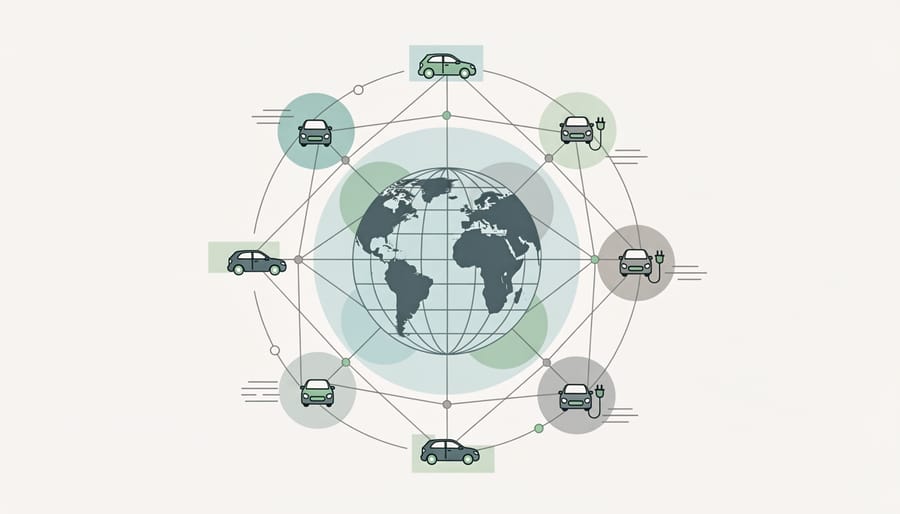
Global organizations play a pivotal role in accelerating electro-mobility adoption by creating platforms for cross-border knowledge exchange. The International Energy Agency, through initiatives like the Electric Vehicles Initiative, brings together governments from leading markets to share policy lessons and implementation experiences. These collaborative frameworks enable countries at different stages of deployment to learn from both successes and setbacks, significantly reducing the time and cost required to develop effective strategies.
Regional networks have proven particularly valuable in facilitating peer-to-peer learning. The Nordic countries, for instance, established forums where municipalities exchange practical insights on charging infrastructure deployment, grid integration, and consumer incentive programs. This approach has helped smaller markets avoid costly missteps while adapting proven solutions to local contexts. Similarly, the C40 Cities Climate Leadership Group connects urban centers worldwide, enabling mayors and transport officials to compare procurement strategies and fleet electrification timelines.
Research institutions and industry associations contribute by documenting case studies and conducting comparative analyses across markets. These evidence-based resources help policymakers understand which regulatory approaches yield the highest adoption rates under specific economic and geographic conditions. By synthesizing data from diverse markets, international bodies create actionable intelligence that transforms isolated experiments into scalable, replicable best practices, ultimately strengthening the global transition to sustainable transportation.
Coordinating Across Borders
The transition to electro-mobility cannot succeed through isolated national efforts alone. As electric vehicles cross borders and supply chains span continents, international coordination becomes essential for creating coherent frameworks that enable market growth while addressing climate objectives.
Standards harmonization represents a critical component of this coordination. When charging infrastructure protocols differ between regions, manufacturers face increased costs and consumers encounter compatibility barriers. The International Electrotechnical Commission and similar bodies work to establish unified technical specifications, ensuring that an electric vehicle charged in Berlin can seamlessly recharge in Bangkok. These efforts extend beyond physical infrastructure to encompass battery safety standards, grid integration protocols, and lifecycle assessment methodologies.
Regulatory alignment proves equally vital. Divergent emissions testing procedures or conflicting battery recycling requirements create inefficiencies that slow adoption rates. Industry coalitions collaborate with intergovernmental organizations to develop regulatory frameworks that balance environmental ambition with practical implementation timelines. The success of such initiatives depends on genuine stakeholder engagement, bringing together automakers, utilities, technology providers, and government representatives.
Shared emissions reduction targets provide the common purpose that unites these coordination efforts. When industry players commit to measurable decarbonization milestones through multilateral agreements, they create accountability mechanisms that drive progress. This collaborative approach transforms competition into collective problem-solving, accelerating the systemic changes necessary for sustainable transportation.
The transition to zero-emission mobility stands at a critical juncture where effective industry representation emerges not merely as advocacy, but as an essential catalyst for systemic transformation. Throughout this exploration, we have witnessed how scientific integrity forms the bedrock upon which credible policy influence is built. When industry representatives ground their arguments in peer-reviewed research, transparent data, and rigorous analysis, they transform from stakeholders with commercial interests into trusted partners in evidence-based policymaking.
The complexity of electro-mobility demands collaboration that transcends traditional boundaries. Vehicle manufacturers, technology innovators, energy providers, academic institutions, and civil society organizations each possess unique insights that, when synthesized through coordinated representation, create comprehensive solutions to multifaceted challenges. This collaborative framework ensures that policy recommendations address technical feasibility, environmental imperatives, economic viability, and social equity simultaneously.
Strategic advocacy amplifies these collective efforts by translating technical possibilities into actionable policy pathways. Whether through targeted engagement with legislators, public awareness campaigns, or participation in regulatory consultations, well-coordinated industry representation shapes the regulatory environments that either accelerate or hinder electrification progress.
As we advance toward sustainable transport futures, the responsibility extends across all stakeholders. Policymakers must remain receptive to evidence-based input while maintaining public interest priorities. Industry representatives must uphold transparency and scientific rigor in their advocacy. Research institutions must continue producing accessible, policy-relevant knowledge. Together, these coordinated efforts will determine not whether the transition succeeds, but how swiftly and equitably it transforms global mobility systems for generations to come.