
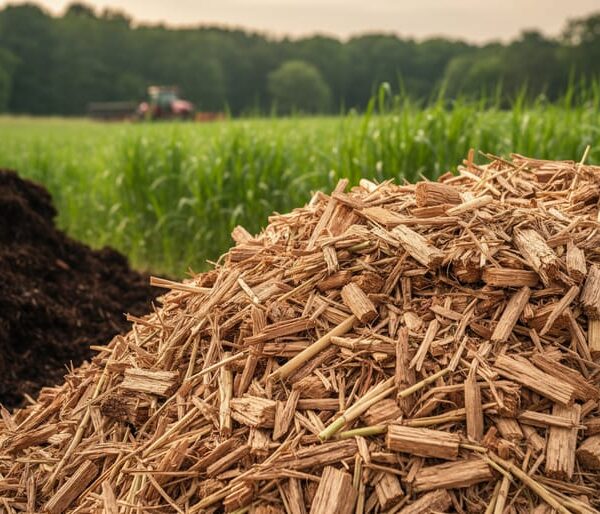
Biomass is organic material from plants and animals that can be converted into energy through combustion, fermentation, or other processes. As a fuel source, it includes wood, crop residues, animal manure, algae, and dedicated energy crops like switchgrass or willow.
The answer to whether biomass qualifies as renewable isn’t a simple yes or no. It depends entirely on how the organic material is sourced and replenished. When harvested sustainably, meaning new plant growth absorbs the carbon dioxide released during combustion at roughly the same rate it’s emitted, biomass operates within a renewable cycle. But when forests are clear-cut faster than they regrow, or when energy-intensive farming practices deplete soil and release stored carbon, biomass loses its renewable credentials and becomes a net contributor to atmospheric greenhouse gases.
This classification matters because policy makers, energy companies, and investors base critical infrastructure and subsidy decisions on whether biomass counts as clean energy. The European Union, United States, and other jurisdictions have awarded biomass renewable status under specific conditions, yet scientists continue debating the carbon accounting methods that determine its climate impact. Some biomass pathways, like capturing methane from landfills or agricultural waste, offer clear environmental benefits. Others, particularly large-scale wood pellet production from whole trees, raise serious questions about forest carbon debt and biodiversity loss.
Understanding the science behind biomass energy production, the diverse feedstock types, current applications across transportation and power generation, and the environmental trade-offs gives you the foundation to evaluate biomass claims critically and make informed decisions about its role in a decarbonized energy system.
What Biomass Energy Means
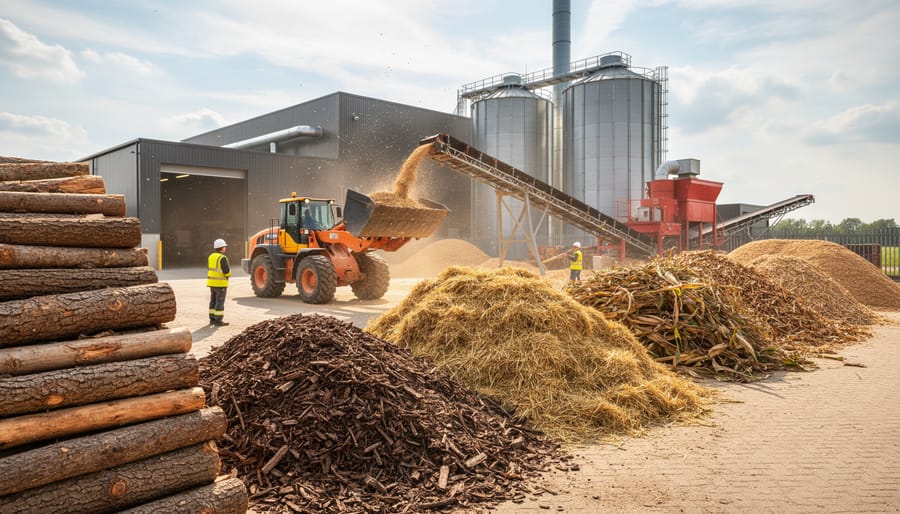
Biomass energy is power derived from organic matter that has recently stored energy from the sun through photosynthesis. Unlike fossil fuels that took millions of years to form, biomass materials can be replenished within a human timeframe, ranging from weeks for fast-growing crops to decades for managed forests.
The fundamental principle is straightforward: plants capture solar energy and store it as chemical energy in their tissues. When we convert this biological material into heat, electricity, or liquid fuels, we’re releasing that stored energy. This conversion can happen through direct combustion, where organic matter is burned for heat, or through more sophisticated processes like anaerobic digestion (which produces biogas) and fermentation (which yields ethanol).
- Biomass
- Organic material derived from living or recently living organisms that can be used as an energy source, including plant matter, agricultural waste, and animal byproducts.
- Bioenergy
- Energy produced from biomass feedstocks through various conversion processes, delivered as heat, electricity, or transportation fuels.
- Feedstock
- The raw biological material used as input for energy conversion systems, essentially, the “fuel” before processing.
- Organic matter
- Carbon-based compounds from biological sources, containing stored chemical energy that can be released through decomposition or combustion.
What qualifies as biomass spans a remarkably diverse range of materials. Agricultural residues include crop stalks, husks, and processing waste from food production. Forestry biomass encompasses logging residues, sawmill offcuts, and wood from forest management activities. Purpose-grown energy crops like switchgrass, miscanthus, and short-rotation woody crops are cultivated specifically for energy production. Animal waste from livestock operations provides another significant feedstock category. Algae, both microalgae and macroalgae (seaweed), represents an emerging biomass source with high growth rates and minimal land requirements. Even municipal organic waste and food scraps can serve as biomass feedstock when diverted from landfills.
The variety of materials reflects biomass energy’s flexibility: different feedstocks suit different conversion technologies and end uses, making it adaptable to regional resources and local energy needs.
The Renewable Question: What Makes Biomass Renewable (and When It Isn’t)
The Carbon Cycle Connection
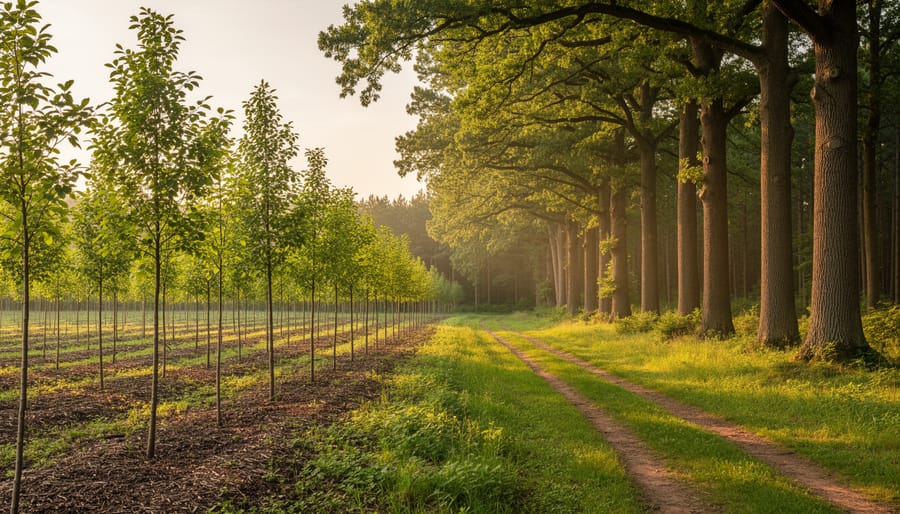
Biomass operates within Earth’s natural carbon cycle in a fundamentally different way than fossil fuels. When plants grow, they absorb carbon dioxide from the atmosphere through photosynthesis, storing that carbon in their tissues. Burning biomass releases this carbon back into the atmosphere, but crucially, it’s the same carbon that was recently captured, not ancient carbon locked away for millions of years as with coal or oil.
This creates what scientists call a closed-loop system. A tree burned for energy in 2026 releases carbon that was absorbed perhaps 20 to 50 years ago. If a new tree grows in its place, it recaptures equivalent carbon, theoretically achieving carbon neutrality over the complete cycle.
The critical variable is time. Fast-growing crops like switchgrass or miscanthus complete this cycle in months, making their carbon accounting straightforward. Slow-growing hardwood forests, however, may take a century to fully recapture released carbon. During that lag period, atmospheric CO₂ levels remain elevated, a temporal mismatch that challenges simple carbon-neutral claims.
Weather patterns, soil conditions, and harvest methods further complicate real-world carbon accounting. The “on paper” neutrality of biomass depends entirely on regrowth actually happening at the pace assumed in lifecycle assessments.
Sustainability Criteria That Matter
Whether biomass operates as a renewable resource hinges on how we source and manage it. Sustainable forestry practices form the foundation: selective harvesting, replanting programs, and maintaining forest ecosystem health ensure biomass feedstocks regenerate faster than we consume them. Clear-cutting old-growth forests for wood pellets destroys carbon sinks and biodiversity, negating any renewable credentials.
Growth-to-harvest ratios matter enormously. Fast-growing crops like switchgrass and miscanthus achieve net-positive carbon balances within years, while hardwood forests require decades to sequester equivalent carbon. The math only works when regrowth outpaces extraction over meaningful timeframes.
Agricultural residue management offers genuinely renewable biomass when utilizing waste streams, crop stubble, prunings, processing byproducts, that would otherwise decompose or burn in fields. This diverts existing organic matter without competing for land or disrupting food production.
Certification systems like the Roundtable on Sustainable Biomaterials (RSB) and Forest Stewardship Council (FSC) establish accountability. They verify feedstock origin, track carbon footprints throughout supply chains, and enforce criteria for land rights, water use, and ecological preservation. Without third-party verification, “renewable” becomes an unsupported claim rather than a measurable reality.
How Biomass Energy Production Works
From Feedstock to Energy
The journey from raw organic material to usable energy follows a carefully orchestrated sequence of operations. It begins with feedstock collection, harvesting agricultural residues after crop production, gathering forestry thinnings from managed woodland operations, or collecting dedicated energy crops like switchgrass or miscanthus. This material arrives at processing facilities containing varying moisture content and physical characteristics that determine the next steps.
Pre-processing prepares the feedstock for conversion. Woody materials get chipped or pelletized to create uniform particle sizes, while wet feedstocks like animal manure may undergo dewatering. Drying reduces moisture content to optimal levels, typically below 20% for combustion processes, which directly affects conversion efficiency and energy yield.
The conversion stage transforms prepared biomass through one of several pathways. Direct combustion burns the material in specialized boilers, generating steam that drives turbines for electricity generation or provides process heat. Gasification heats biomass with limited oxygen, producing syngas, a mixture of hydrogen and carbon monoxide, that can fuel gas turbines or undergo further processing into liquid biofuels. Anaerobic digestion breaks down organic matter through bacterial action in oxygen-free environments, yielding biogas rich in methane for electricity generation or vehicle fuel. Pyrolysis applies high heat without oxygen, creating bio-oil, biochar, and combustible gases.
Each pathway delivers specific energy products suited to different applications. Combined heat and power installations capture both electricity and thermal energy, achieving conversion efficiencies approaching 90% compared to 30-40% for electricity-only generation, maximizing the energy extracted from each ton of biomass processed.
Categories of Biomass Energy Resources
Biomass resources fall into distinct categories based on their origin, each offering unique characteristics and energy potential. Understanding these classifications reveals the breadth of organic materials that can serve as renewable energy feedstock.
Forest-derived biomass encompasses wood from sustainably managed timberlands, logging residues left after timber harvesting, mill waste from lumber processing, and bark or sawdust from manufacturing operations. These materials represent some of the most energy-dense biomass options, with established supply chains in forestry regions. When sourced from certified sustainable forests with replanting programs, woody biomass maintains its renewable credentials through managed regeneration cycles.
Agricultural biomass includes crop residues such as corn stover, wheat straw, rice husks, and sugarcane bagasse, materials that remain after food harvest. Purpose-grown energy crops like switchgrass, miscanthus, and fast-growing willow also fit this category. Agricultural biomass offers the advantage of utilizing waste streams that would otherwise decompose naturally, capturing energy value without competing directly with food production when managed properly.
Animal and organic waste biomass covers livestock manure, food processing waste, municipal organic waste, and sewage sludge. These materials present dual benefits: energy generation while solving waste management challenges. Anaerobic digestion of animal waste produces biogas, transforming environmental liabilities into energy assets while reducing methane emissions that would otherwise escape to the atmosphere.
Aquatic biomass represents an emerging category, primarily algae and seaweed cultivated specifically for energy production. Algae grow rapidly, require no arable land, and can be cultivated in saltwater or wastewater, avoiding freshwater resource competition. Though still developing commercially, aquatic biomass offers theoretical yields far exceeding terrestrial crops per unit area.
Each category presents different harvest cycles, energy conversion methods, and sustainability considerations. The diversity of biomass types allows regional energy strategies to leverage locally abundant resources while maintaining renewable principles through appropriate management practices.
Where Biomass Energy Is Applied Today
Biomass in Transportation and Mobility

Biofuels derived from biomass serve a strategic role in decarbonizing sectors of transportation where electrification faces technical or economic barriers. Heavy-duty freight, aviation, and maritime shipping rely on high energy-density fuels that current battery technology cannot match cost-effectively at scale. Second-generation biofuels produced from agricultural residues, forestry waste, and dedicated energy crops offer drop-in compatibility with existing engines and infrastructure, enabling emissions reductions without fleet replacement.
However, biofuels complement rather than replace electromobility in a comprehensive decarbonization strategy. Passenger vehicles and light commercial transport benefit more from direct electrification, which delivers superior energy efficiency and lower lifecycle emissions when powered by renewable electricity. Biomass-derived fuels find their optimal application in hard-to-electrify segments: long-haul trucking on routes lacking charging infrastructure, intercontinental flights, and ocean-going vessels where weight and range requirements exceed battery capabilities.
The transition framework recognizes these fuels as bridging solutions. Sustainable aviation fuel mandates and marine biofuel adoption targets in 2026 reflect biomass’s interim function while zero-emission technologies mature. Success depends on feedstock sustainability, production efficiency improvements, and clear boundaries defining where biofuels genuinely serve decarbonization versus perpetuating fossil dependence.
Environmental and Sustainability Considerations
Biomass energy presents a complex environmental profile that defies simple categorization as “good” or “bad” for sustainability. The reality depends heavily on sourcing practices, conversion technologies, and the specific context of implementation.
Positive Environmental Contributions
When managed responsibly, biomass energy offers genuine environmental benefits. Converting agricultural residues, forestry waste, and municipal organic waste into energy addresses waste management challenges while displacing fossil fuels. This dual benefit becomes particularly valuable in regions struggling with crop residue disposal, where burning in open fields creates severe air quality problems, or in communities seeking alternatives to landfilling organic matter that would otherwise release methane, a greenhouse gas far more potent than carbon dioxide.
Biomass provides dispatchable renewable power, meaning it generates electricity on demand rather than intermittently like solar or wind. This characteristic helps stabilize grids integrating variable renewables, reducing the need for fossil fuel backup plants. Rural economies benefit when local biomass resources create employment in collection, processing, and plant operations, keeping energy dollars within communities rather than exporting them to distant fossil fuel producers.
Environmental Concerns Requiring Management
The environmental case weakens considerably when biomass production competes with food crops for agricultural land, drives deforestation, or relies on monoculture energy crops that reduce biodiversity. Converting forests or grasslands to energy crop plantations releases stored carbon and destroys ecosystems, negating climate benefits for decades or longer.
Combustion emissions present another challenge. While biomass releases roughly the same amount of CO₂ per unit energy as coal, the carbon neutrality argument assumes sustainable regrowth that reabsorbs those emissions. Poor management breaks this cycle. Biomass combustion also produces particulate matter and nitrogen oxides that affect local air quality, requiring modern emission controls to minimize health impacts.
Water consumption becomes significant for certain energy crops, particularly in water-stressed regions. Intensive biomass cultivation can strain water resources and, without proper practices, contribute to soil degradation and nutrient runoff into waterways.
The sustainability verdict hinges on implementation: biomass systems using genuine waste streams with modern conversion technologies and robust environmental safeguards deliver meaningful benefits, while poorly designed systems risk environmental harm that undermines their renewable credentials. Third-party certification schemes and lifecycle assessments help distinguish responsible biomass operations from problematic ones.
Common Questions About Biomass Renewability
Common questions about biomass renewability often reflect genuine uncertainty about when and whether this energy source functions as truly renewable. The following address the most contested aspects.
Is burning wood truly carbon neutral?
Burning wood releases carbon dioxide immediately, but the carbon neutrality claim depends on whether new trees absorb that carbon as they grow. This works only when forests are managed sustainably with harvest rates matching or slower than regrowth, and when the carbon accounting includes the full time lag between emission and reabsorption, which can span decades.
How does biomass compare to solar and wind as renewable options?
Unlike solar and wind which produce zero-emission electricity, biomass combustion releases particulates and carbon dioxide at the point of use. However, biomass offers dispatchable baseload power that works when the sun doesn’t shine and wind doesn’t blow, making it complementary rather than directly comparable to intermittent renewables in a balanced energy system.
Can biomass energy scale sustainably to meet significant energy demand?
Sustainable scaling faces real limits tied to available land, competition with food production, water resources, and ecosystem preservation. Biomass works best as one component in a diversified renewable portfolio rather than as a primary large-scale solution, particularly when sourced from genuine waste streams and agricultural residues rather than purpose-grown energy crops.
What certifications ensure biomass qualifies as renewable?
The Sustainable Biomass Program (SBP) and Forest Stewardship Council (FSC) certification verify sustainable sourcing and forest management practices. These standards assess greenhouse gas emissions, legal compliance, and ecological impact, providing third-party validation that biomass feedstocks meet renewable criteria rather than depleting natural resources.
The tension in these questions reflects a broader reality: biomass renewability isn’t an inherent property of the fuel itself but a function of how it’s produced, sourced, and managed. A wood pellet can represent renewable energy when made from sawmill waste in a sustainably managed forest, or contribute to deforestation when sourced from clear-cut primary woodland. The difference lies entirely in the supply chain and governance framework surrounding production. This conditional status makes biomass unique among renewable resources, requiring more scrutiny and verification than solar panels or wind turbines where the renewable nature is unambiguous once the infrastructure is built.
Whether biomass qualifies as a renewable energy resource depends entirely on how we manage it. The answer isn’t a simple yes or no, it’s conditional. Biomass can function as genuinely renewable when sourced from sustainably managed forests, agricultural residues that would otherwise decompose, and waste streams that require disposal anyway. Under these conditions, the carbon cycle remains balanced, regrowth matches or exceeds harvest rates, and ecosystems stay intact.
Strip away those sustainability criteria, however, and biomass loses its renewable status. Clearcutting old-growth forests, converting biodiverse land to monoculture energy crops, or harvesting faster than regeneration rates can sustain, these practices make biomass no different from fossil fuels in environmental impact, sometimes worse.
The determining factors are transparent: rigorous lifecycle assessments that account for all emissions from harvest through combustion, third-party certification systems that verify sustainable practices, and regulatory frameworks that prevent gaming the system. These mechanisms separate renewable biomass from greenwashed destruction.
Biomass fills specific roles that intermittent renewables cannot, dispatchable baseload power, high-temperature industrial heat, and aviation fuel where battery alternatives remain impractical. But it’s one tool among many, not a silver bullet. The most effective decarbonization strategies combine biomass where genuinely sustainable with wind, solar, and rapid electrification of transport and heating. Each technology addresses different needs; none stands alone.
The renewable label demands continuous scrutiny. Biomass earns it through demonstrated sustainability, not assumed carbon neutrality.