

A global network is an interconnected ecosystem of organizations, individuals, and institutions spanning multiple countries and continents, working together toward common objectives through coordinated action, shared resources, and collective expertise. These networks transcend geographic and political boundaries to address challenges that no single entity can solve alone.
In the context of sustainable transport and electromobility, global networks have become essential infrastructure for accelerating the transition away from fossil fuels. Consider how the rapid expansion of electric vehicle adoption between 2020 and 2026 required simultaneous breakthroughs in battery technology, charging infrastructure, policy frameworks, and consumer education across dozens of markets. No single company, government, or research institution could orchestrate this transformation independently. Instead, success emerged from global networks connecting automakers in Germany and China with lithium suppliers in South America, software developers in Silicon Valley with grid operators in Europe, and policy researchers in Scandinavia with implementation teams in Southeast Asia.
What makes these networks powerful isn’t just their geographic reach. The real value lies in how they pool diverse knowledge, distribute risk across stakeholders, create feedback loops that accelerate learning, and build trust mechanisms that enable cooperation between traditionally competitive actors. A charging network operator in Norway shares operational data with counterparts in California, allowing both to avoid costly mistakes and adopt proven solutions faster.
This article explains how global networks function operationally, identifies the core components that determine their effectiveness, and demonstrates their practical application in solving real-world transport challenges. Understanding these dynamics matters for anyone working to scale sustainable solutions in an interconnected world.
What a Global Network Means for Organizational Impact
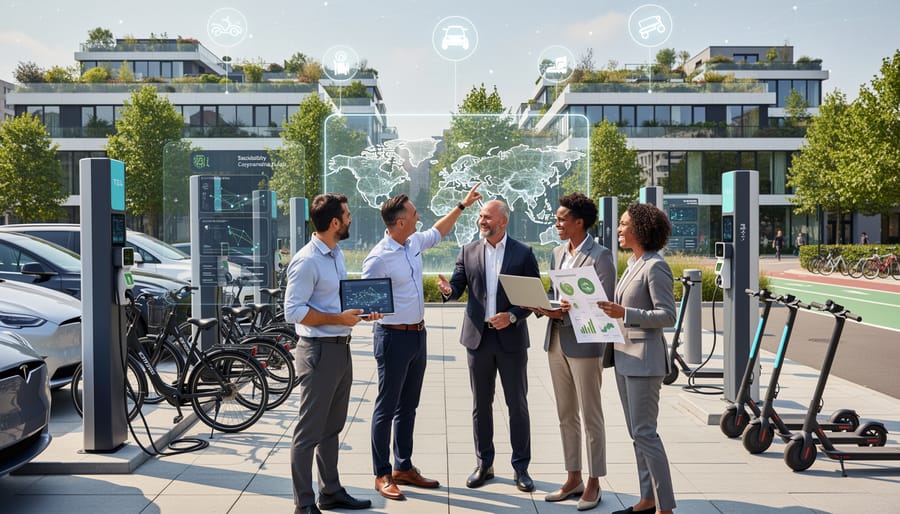
A global network is an interconnected system of organizations, individuals, and institutions that collaborate across geographic and sectoral boundaries to achieve shared objectives. Unlike traditional hierarchical organizations with centralized command structures, global networks operate through distributed coordination, connecting researchers at universities, professionals in industry, representatives from NGOs, vehicle manufacturers, and government policymakers who contribute complementary expertise and resources toward common goals.
The distinction matters because networks function fundamentally differently than conventional organizations. A traditional organization controls its members through formal employment relationships and top-down directives. A network, by contrast, connects independent participants who maintain their autonomy while choosing to align efforts around shared priorities. This creates flexibility: a researcher in Norway can collaborate with a manufacturer in Japan and a policymaker in Brazil without requiring institutional mergers or rigid reporting lines.
- Global Network
- An interconnected system of independent stakeholders collaborating across borders to advance shared missions through coordinated action rather than hierarchical control.
- Node
- An individual participant or organization within the network that contributes expertise, resources, or influence while maintaining operational independence.
- Hub
- A central coordinating entity or platform that facilitates communication, knowledge exchange, and alignment among network nodes without exerting top-down authority.
- Stakeholder Ecosystem
- The full range of diverse participants, researchers, industry, NGOs, policymakers, and practitioners, whose collective involvement enables comprehensive problem-solving.
- Network Governance
- The collaborative decision-making processes and coordination mechanisms that maintain network alignment, credibility, and effectiveness without traditional management hierarchies.
What makes this model powerful for organizational impact is the capacity for knowledge exchange at scale. When a charging infrastructure challenge emerges in one country, network members can quickly access lessons from similar deployments elsewhere. When policymakers draft emissions regulations, they tap into validated research from multiple institutions rather than relying on a single source. This collective advocacy amplifies influence: a coordinated message from dozens of credible organizations across continents carries more weight than isolated voices.
The network structure also enables rapid response to emerging challenges. Instead of convening formal committees and navigating bureaucratic approval chains, networks mobilize expertise through working groups and task forces that form around specific needs, then dissolve when objectives are met.
How a Global Organizational Network Works
Communication and Coordination Infrastructure
Digital platforms form the backbone of modern global networks, enabling real-time collaboration across continents. Most networks operate through secure member portals where researchers share working documents, data sets, and draft publications. Cloud-based tools allow simultaneous editing of technical reports, while video conferencing systems host monthly coordination calls that span time zones.
Working groups tackle specific topics, battery lifecycle analysis, charging infrastructure standards, or heavy-duty vehicle electrification, breaking complex challenges into manageable streams. Each group sets its own meeting cadence and deliverables, reporting progress to the broader network quarterly.
Task forces differ from working groups in their urgency and scope. When policy windows open or technical controversies emerge, networks convene short-term task forces with tight mandates: produce a position paper in six weeks, coordinate stakeholder testimony for upcoming hearings, or respond to proposed regulations.
Annual convenings remain irreplaceable. Face-to-face gatherings build trust, spark unexpected collaborations, and allow for sensitive discussions that digital channels cannot replicate. These events typically combine plenary sessions showcasing research findings with breakout workshops where members hash out contentious issues and align on strategic priorities for the coming year.
Governance and Decision-Making
Global networks typically operate through steering committees or executive boards that set strategic direction while preserving the independence of individual member organizations. Rather than top-down mandates, effective networks rely on consensus-building processes where decisions emerge through dialogue, expert working groups, and iterative consultation across stakeholder categories. This approach respects the autonomy of academic institutions, industry partners, and NGOs while enabling coordinated action on shared priorities like emissions reduction targets or charging infrastructure standards.
Maintaining scientific integrity stands as a non-negotiable principle. Networks insulate research activities from political pressure by establishing clear peer review protocols, requiring transparent methodology disclosure, and protecting scientific integrity through institutional firewalls between advocacy work and evidence generation. Decision-making structures often separate technical committees (focused on research quality and data validation) from policy engagement teams (translating findings for legislative audiences), ensuring that recommendations remain grounded in verified evidence rather than political convenience. This governance model allows global networks to speak with authority across borders while avoiding the capture or bias that can compromise single-institution initiatives.
Knowledge Generation and Dissemination
Global networks excel at generating knowledge through distributed research efforts that draw on institutional strengths across continents. Rather than siloing expertise, members co-author studies, pool datasets, and validate findings through peer review within the network before public release. This collaborative validation increases credibility and catches regional blind spots that single-institution research might miss.
The real value emerges when networks translate technical findings into formats decision-makers can actually use. Policy briefs, stakeholder workshops, and visual summaries distill complex battery lifecycle analyses or grid integration studies into clear recommendations. Effective networks prioritize translating evidence into policy by matching communication formats to audience needs, technical reports for engineers, executive summaries for ministers, infographics for public campaigns. This translation layer ensures research influences real-world decisions rather than gathering dust in academic journals.
Core Components of an Effective Global Network
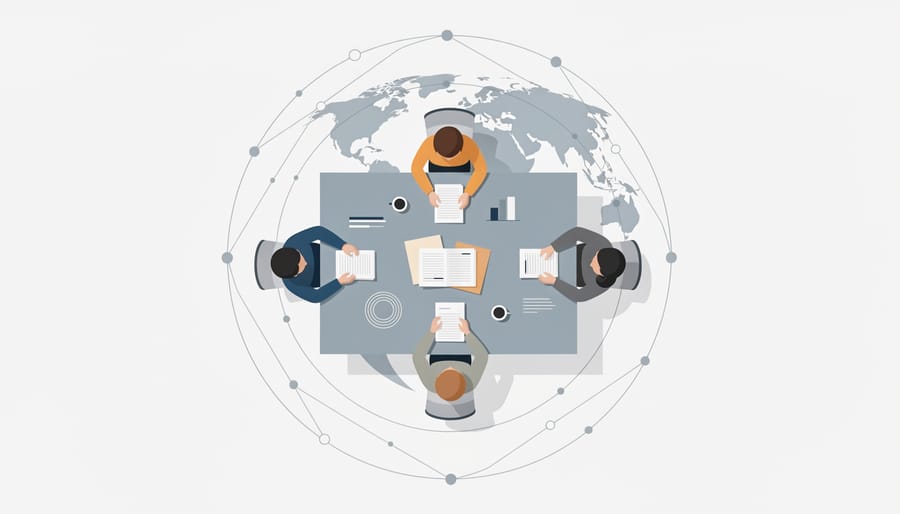
A truly effective global network doesn’t emerge by chance. It rests on deliberate design choices that enable coordination, credibility, and sustained impact across borders and sectors. Understanding these core components reveals why some networks reshape entire industries while others fizzle into fragmented working groups.
Stakeholder Diversity as Foundation
The strength of a global network begins with who sits at the table. Meaningful representation spans researchers from universities and national labs, industry practitioners ranging from established manufacturers to innovative startups, policymakers at local and national levels, NGOs advocating for environmental and social outcomes, and end users whose experiences ground abstract research in daily reality. This diversity prevents groupthink and ensures solutions address real-world complexity rather than theoretical ideals.
In sustainable transport networks, this translates to vehicle engineers collaborating with urban planners, battery chemists consulting with recycling specialists, and charging infrastructure developers learning from rural electrification experts. Each perspective challenges assumptions and surfaces blind spots the others might miss.
The Essential Building Blocks
Every effective global network relies on several interconnected components working in concert:
- Stakeholder diversity spanning research institutions, industry, policy bodies, NGOs, and practitioner communities to ensure comprehensive perspectives
- Research infrastructure including shared databases, standardized methodologies, and peer-review processes that maintain scientific rigor
- Advocacy channels connecting evidence to decision-makers through policy briefs, testimony opportunities, and regulatory consultations
- Industry partnerships facilitating pilot projects, real-world testing, and technology validation beyond laboratory conditions
- Communication platforms enabling knowledge exchange through conferences, webinars, working groups, and digital collaboration tools
- Funding mechanisms combining membership fees, competitive grants, and project-specific support to sustain operations without compromising independence
These components don’t function in isolation. Communication platforms amplify research findings, industry partnerships test theoretical advances, and advocacy channels transform validated solutions into policy action.
Credibility Through Research Rigor
Networks gain influence by producing evidence that stakeholders trust. This demands robust research capacity: access to datasets across jurisdictions, expertise in lifecycle assessment and environmental impact modeling, connections to testing facilities for validation studies, and transparent peer-review processes that withstand scrutiny.
When a sustainable mobility network publishes emissions comparisons or infrastructure cost analyses, policymakers rely on that data because the methodology survived challenge from multiple disciplines and competing interests. That credibility becomes currency for shaping regulations and investment priorities.

How Global Networks Are Applied Across Sectors
Policy Advocacy and Legislative Influence
Global networks translate research findings into policy action by presenting unified, evidence-based positions to legislators and regulatory bodies. When multiple credible institutions across countries align around specific recommendations, such as lifecycle emission accounting methods or charging infrastructure standards, policymakers receive consistent signals that transcend national lobbying efforts.
This coordinated approach works through three channels. First, networks produce policy briefs that distill complex technical research into clear recommendations, often co-authored by experts from different regions to demonstrate international consensus. Second, network representatives participate directly in legislative consultations, standards committees, and advisory panels, where their multi-stakeholder perspective carries weight that individual organizations cannot match. Third, networks coordinate testimony and comment submissions across jurisdictions, creating momentum that helps progressive policies gain traction.
The impact appears in tangible outcomes: revised emissions testing protocols that reflect real-world driving conditions, procurement rules that favor zero-emission vehicles, and infrastructure funding allocations informed by network-validated deployment models. By maintaining scientific rigor while speaking with one voice, global networks bridge the gap between research and regulation.
Research Collaboration and Innovation
Global networks accelerate innovation by enabling researchers across universities, national labs, and industry centers to combine specialized knowledge and tackle problems no single institution could solve alone. When developing advanced battery chemistries, for example, network members might contribute expertise in materials science, thermal management, manufacturing processes, and safety testing, pooling data sets and computational models to identify promising formulations faster than isolated teams working independently.
These collaborative frameworks prove particularly valuable for challenges requiring expensive infrastructure or longitudinal data collection. Charging network optimization studies benefit from partners sharing real-world usage patterns from different markets, while lifecycle assessment research gains rigor when multiple teams validate methodologies across varying grid mixes and vehicle fleets. Networks also reduce duplicated effort: instead of five laboratories separately testing the same electrode material, coordinated research protocols allow teams to divide experimental parameters and share validated results, compressing development timelines while maintaining scientific rigor.
Knowledge Transfer and Capacity Building
Networks operate as powerful conduits for expertise and skills, moving insights from frontline innovators to regions where capacity gaps slow progress. A research consortium in Scandinavia that’s solved cold-weather charging challenges shares protocols with counterparts in Canada; an EV adoption campaign proven in California informs strategies in Southeast Asian cities. This peer-to-peer knowledge flow bypasses the slow filters of traditional publishing or isolated bilateral exchanges.
Technical training happens through a mix of formats: webinars breaking down lifecycle assessment methodologies for policymakers, hands-on workshops where technicians from emerging markets learn maintenance techniques alongside seasoned engineers, and documentation libraries translating complex research into implementation guides. Networks also enable reverse learning, developed economies adopt leapfrog technologies pioneered in resource-constrained settings, like battery-swapping systems or lightweight vehicle designs. The value lies not just in what gets shared, but in creating sustained relationships that make future collaboration instinctive rather than bureaucratic.
The Strategic Value of Network Membership
For a mid-sized electric vehicle manufacturer navigating the transition from internal combustion engines, joining Bioenergy Task 39 transformed what had been a series of expensive, isolated missteps into a coordinated path forward. Within six months of membership, the company’s engineers accessed validated lifecycle assessment methodologies that saved them eighteen months of independent research. They contributed data to a multi-country study on battery recycling, which positioned them as thought leaders when new EU regulations emerged. The network connection gave them something money alone couldn’t buy: credibility with policymakers who were drafting standards that would define their market.
This experience illustrates why membership in global organizational networks delivers measurable strategic value across three dimensions.
First, networks provide privileged access to emerging research before it reaches public channels. Members participate in working groups where preliminary findings are discussed, methodologies are refined, and knowledge gaps are identified. A researcher at a Swedish university might share battery degradation data that helps a Japanese manufacturer optimize warranty terms, while both contribute to publications that shape international standards. This collaborative intelligence creates competitive advantage for industry participants and accelerates breakthroughs for academic members.
Second, networks amplify advocacy power through coordinated, evidence-based messaging. A single company calling for updated charging infrastructure standards carries limited weight. That same company, backed by a network of fifty research institutions and twenty NGOs presenting unified data on grid integration, shapes legislative outcomes. Policy makers trust scientifically rigorous recommendations from diverse, independent coalitions more than isolated lobbying efforts.
Third, membership signals institutional credibility. Organizations associated with respected global networks gain reputational benefits that open doors to partnerships, funding opportunities, and regulatory consultations. A startup developing novel battery chemistry gains legitimacy when its founders participate in network task forces alongside established manufacturers and university labs.
The strategic calculation is straightforward: networks convert isolated expertise into collective influence, turning membership fees into leverage that individual organizations cannot generate alone.
Frequently Asked Questions About Global Organizational Networks
Joining or engaging with a global organizational network raises legitimate questions about governance, commitment, and value. Here’s what you need to know before participating.
Who can join a global organizational network?
Most global networks welcome researchers, industry professionals, NGOs, academic institutions, and policymakers whose work aligns with the network’s mission. Membership criteria typically emphasize expertise, commitment to collaborative principles, and willingness to contribute knowledge or resources.
How are decisions made in global networks?
Decision-making structures vary, but effective networks use consensus-building processes through steering committees or working groups. Major decisions often require input from diverse stakeholder representatives to ensure no single interest dominates the agenda.
How do networks maintain independence from political or commercial pressures?
Strong networks establish clear governance frameworks that separate research integrity from funding sources, require transparent conflict-of-interest disclosures, and draw membership from multiple sectors to prevent any single stakeholder from controlling outputs or messaging.
What’s the typical time commitment for network participation?
Participation levels range from passive membership (receiving updates and research) to active engagement in working groups or leadership roles. Most networks accommodate varying commitment levels, allowing members to contribute according to their capacity and interests.
Success measurement also varies. Some networks track policy citations, research publications, or industry standards influenced by their work. Others focus on member satisfaction, geographic reach, or the diversity of stakeholder representation. The most meaningful metrics align with the network’s core mission, whether that’s advancing specific technologies, shaping regulations, or building regional capacity in emerging markets.
Global networks represent a strategic response to challenges that refuse to respect borders or sectors. Climate change and the transition to sustainable mobility demand coordinated action across research institutions, governments, industries, and advocacy organizations, no single entity holds all the expertise, resources, or influence needed to drive systemic change.
The evidence from functioning networks like Bioenergy Task 39 demonstrates how collaborative structures amplify impact. Peer-reviewed research gains credibility when validated across multiple institutions. Policy recommendations carry weight when backed by diverse stakeholders speaking from unified evidence. Innovation accelerates when knowledge flows freely between laboratories, factories, and field deployments. Individual organizations working in isolation cannot match this scale or legitimacy.
For professionals engaged in electromobility, renewable energy, or transport policy, global networks offer more than information exchange. They provide infrastructure for collective problem-solving, platforms for translating research into regulation, and mechanisms for holding industries and governments accountable to evidence-based standards.
The question isn’t whether global networks matter, their track record in shaping emissions standards, accelerating technology adoption, and influencing billions in infrastructure investment answers that. The real question is how quickly stakeholders recognize their strategic value and contribute their expertise to existing initiatives. The challenges ahead require exactly the kind of coordinated, evidence-driven action that well-structured networks enable.