
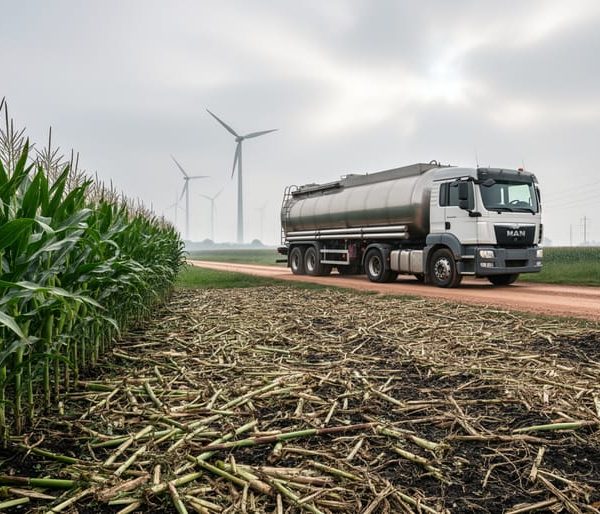
Biofuels face mounting scrutiny in 2026 as evidence reveals significant sustainability, environmental, and economic problems that threaten their role in climate policy. What was once championed as a bridge to decarbonization now confronts well-documented challenges: competition with food production for arable land, lifecycle emissions that often exceed fossil fuel baselines, market distortions from subsidy dependence, and slower-than-promised advances in second-generation technology. These issues are reshaping regulatory debates worldwide, particularly as governments weigh continued biofuel mandates against accelerated investment in electrification and grid infrastructure.
The core tension is straightforward. First-generation biofuels, derived from food crops like corn and rapeseed, consume resources that could feed populations or remain carbon-sequestering ecosystems. Meanwhile, advanced biofuels from agricultural waste and algae have struggled to achieve commercial viability at scale. As policymakers reassess transport decarbonization pathways, the biofuel sector’s persistent challenges are forcing difficult choices about where limited public funds and land should be deployed. Understanding these conflicts is essential for stakeholders navigating the transition to zero-emission mobility, especially as the case for battery-electric and hydrogen solutions strengthens on both cost and environmental grounds.
What Changed: Rising Recognition of Biofuel Limitations
The scientific consensus on biofuels has undergone a sharp revision since 2024, with major regulatory bodies now acknowledging that many biofuel pathways deliver fewer climate benefits than conventional wisdom suggested. The European Union’s updated Renewable Energy Directive III, finalized in late 2025, reclassified several first-generation biofuels as high-risk due to indirect land-use change, effectively capping their contribution to transport decarbonization targets. Similar policy shifts occurred in California, where the Low Carbon Fuel Standard tightened lifecycle carbon intensity thresholds, and in Brazil, where the National Biofuels Policy underwent its most substantial review in a decade following new deforestation data linked to sugarcane expansion.
These revisions stem from improved satellite monitoring of land conversion, more comprehensive methane accounting in agricultural supply chains, and longitudinal studies quantifying carbon debt from ecosystem disruption. The International Energy Agency’s 2025 Bioenergy Report documented that approximately 40% of global biofuel production carries higher lifecycle emissions than the fossil fuels it replaces when land-use impacts are fully accounted for. This evidence base has emboldened environmental organizations and prompted several national governments to announce phase-outs of crop-based biofuel mandates, setting the stage for contentious debates over stranded assets, rural employment, and alternative decarbonization pathways in the transport sector.
Key Developments in Global Biofuel Policy Conflicts
1. Land-Use Change and Food Security Tensions
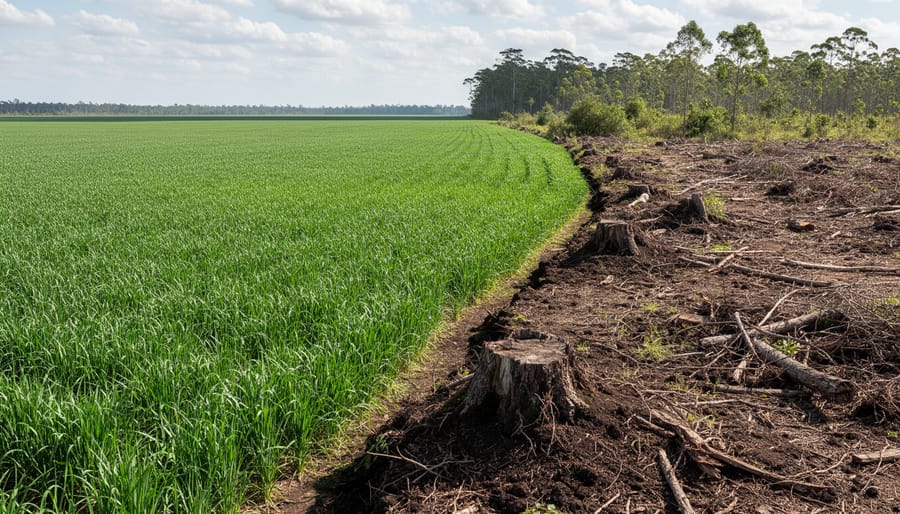
The expansion of biofuel production has triggered sharp policy disputes over land allocation, with mounting evidence that first-generation biofuels directly compete with food systems and accelerate environmental degradation. Research published in 2024-2025 by the European Environment Agency and the International Institute for Sustainability Analysis confirms that converting cropland and forests to grow corn, soy, and palm oil for fuel has measurable impacts: higher food commodity prices, displacement of subsistence farming in developing regions, and indirect land-use change that releases stored carbon at rates offsetting the supposed climate benefits.
Indirect land-use change occurs when existing agricultural land shifts to biofuel feedstocks, pushing food production onto previously uncultivated areas, often tropical forests or peatlands. Satellite data from Brazil and Indonesia shows this pattern clearly: between 2019 and 2025, approximately 2.8 million hectares of forest were cleared in regions with expanding soy and palm oil cultivation linked to biodiesel demand. The carbon debt from such conversions can take decades to repay, even if the biofuel itself burns cleaner than petroleum. Scientific modeling indicates that US corn ethanol, when accounting for iLUC, may emit 20-40% more lifecycle greenhouse gases than gasoline over a thirty-year horizon.
Policy responses have fractured along regional lines:
- The European Union has capped crop-based biofuels at 7% of transport energy and is phasing out palm oil biodiesel by 2030 due to deforestation risks.
- The United States maintains blending mandates under the Renewable Fuel Standard but faces legal challenges from livestock and food industry groups citing corn price volatility.
- Brazil defends sugarcane ethanol as sustainable while environmental NGOs document ongoing Amazon clearing correlated with agricultural expansion.
- Indonesia and Malaysia argue that restrictions on palm oil biodiesel unfairly penalize smallholder farmers and developing economies reliant on export revenue.
The food security dimension intensified during the 2022-2023 grain price spike, when diverting 40% of the US corn harvest to ethanol became politically untenable. Policy makers now confront a zero-sum framing: land used for biofuel crops is land not growing food, at a time when population growth and climate impacts already strain global agriculture.
2. Lifecycle Emissions and Carbon Debt Controversies
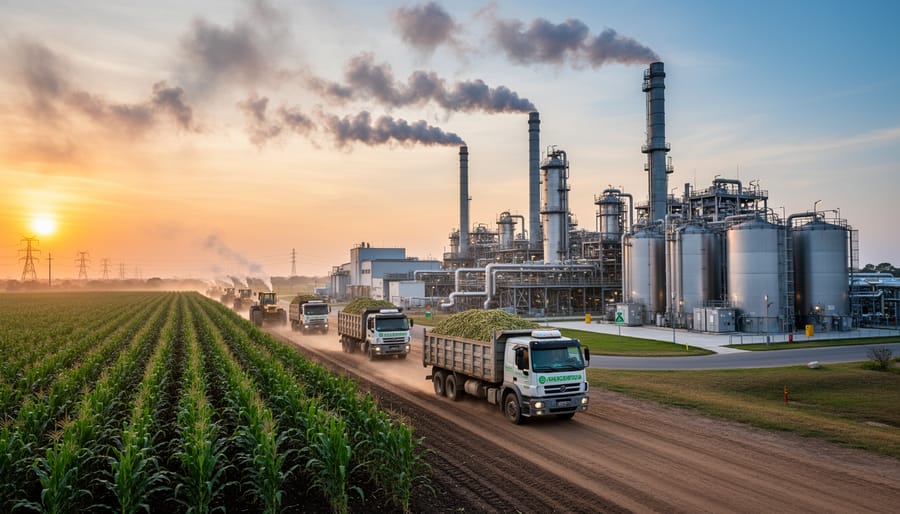
Scientific scrutiny of biofuel emissions intensified in 2026 as lifecycle analyses revealed carbon footprints far exceeding initial industry claims. The core issue centers on carbon debt, the greenhouse gases released when forests or grasslands are converted to biofuel crops. A hectare of cleared rainforest for palm oil biodiesel, for instance, releases stored carbon that can take 50 to 100 years of biofuel combustion savings to offset, rendering the net climate benefit negative over policy-relevant timeframes.
Methane emissions from feedstock production compound the problem. Rice paddy cultivation for bioethanol and manure management in corn-fed livestock operations release substantial methane, a greenhouse gas 28 times more potent than CO2 over a century. When these upstream emissions are factored into lifecycle calculations alongside processing energy and nitrogen fertilizer production, many first-generation biofuels show emissions reductions of only 20 to 30 percent compared to fossil fuels, well below the 65 percent threshold now required under RED II lifecycle emissions criteria for new installations in the EU.
This evidence shift has forced regulatory recalibration. California’s Low Carbon Fuel Standard downgraded carbon intensity scores for corn ethanol in 2025, reducing its value to producers. The UK’s Renewable Transport Fuel Obligation tightened indirect land-use change multipliers, effectively capping certain feedstocks. These adjustments reflect a maturing understanding that biofuels are not inherently low-carbon; their climate value depends entirely on feedstock source, land-use history, and production methods. The controversies have eroded policy confidence in biofuels as a primary decarbonization pathway, redirecting attention toward electrification and genuinely waste-derived fuels.
3. Subsidy Reform and Market Distortion Debates
Government subsidies remain a flashpoint in biofuel policy debates worldwide. In 2026, more than $50 billion in annual public support flows to biofuel production globally, yet mounting evidence shows these incentives distort energy markets and delay investment in more efficient zero-emission alternatives. The United States Renewable Fuel Standard (RFS) mandates blending specific volumes of biofuels into the transportation fuel supply regardless of cost or environmental performance, effectively guaranteeing demand and protecting producers from market competition. The European Union has begun phasing out crop-based biofuel subsidies under its revised Renewable Energy Directive, but legacy support mechanisms continue to inflate production beyond what economics alone would justify.
Critics argue these subsidies create artificial demand for feedstocks that would otherwise fail cost-benefit tests against electric powertrains. A 2025 International Energy Agency analysis found that redirecting biofuel subsidies to charging infrastructure would accelerate transport decarbonization by three to five years in most markets. Industry representatives counter that removing support would collapse the sector before advanced biofuels reach commercial scale, stranding infrastructure and eliminating bridging solutions for hard-to-electrify applications like aviation and shipping.
The debate intensified when Brazil reduced ethanol tax breaks in early 2026, triggering a 23 percent production decline within six months and demonstrating how dependent the industry remains on policy props. Policymakers now face uncomfortable questions about whether continuing subsidies represents responsible stewardship of public funds or protection of politically connected incumbents at the expense of more effective climate solutions.
4. Advanced Biofuels vs. First-Generation: The Technology Divide
Policy makers face a stark choice: sustain subsidies for corn and soy ethanol to protect incumbent producers and refining infrastructure, or redirect funds toward cellulosic and algae biofuels that promise lower lifecycle emissions but remain commercially unproven. First-generation facilities, built under older mandates, lobby to maintain blending requirements and tax credits, arguing that sudden withdrawal would strand billions in capital investment. Meanwhile, advanced biofuel ventures struggle to scale beyond pilot plants, hampered by high feedstock costs, enzyme expense, and insufficient distribution networks. This technology divide fragments regulatory frameworks, some jurisdictions phase out first-generation fuels to meet climate targets, while others extend grandfathered support, delaying the transition and locking in carbon-intensive pathways that undermine decarbonization goals.
Why Biofuel Issues Matter for Zero-Emission Mobility

The biofuel policy conflicts outlined above directly shape the zero-emission mobility transition because they determine where scarce capital, policy attention, and renewable energy resources flow. Every dollar invested in biofuel production infrastructure, every hectare of arable land dedicated to fuel crops, and every renewable electricity kilowatt-hour diverted to biofuel processing represents an opportunity cost against battery electric vehicle charging networks, green hydrogen production, and grid decarbonization. When policymakers lock in long-term biofuel mandates or renew subsidy programs despite mounting evidence of lifecycle emissions problems, they delay the deployment of genuinely zero-tailpipe-emission technologies that scientific consensus now favors for road transport.
Policy credibility suffers when governments promote biofuels as climate solutions while independent lifecycle assessments show net carbon increases from land-use change. This credibility gap undermines public trust in broader decarbonization strategies and creates political cover for delaying more effective interventions. The competition between biofuels and electromobility also plays out in renewable energy allocation: biomethane production competes with renewable electricity for the same wind and solar capacity, yet direct electrification of transport delivers two to three times the greenhouse gas reduction per unit of renewable energy compared to biofuel pathways, according to multiple 2025-2026 comparative studies.
For vehicle manufacturers, fleet operators, and infrastructure investors, biofuel policy uncertainty complicates long-term planning. Automakers committing to battery electric platforms need regulatory certainty that fossil fuel alternatives, including biofuels, will phase out on predictable timelines. Continued biofuel support fragments the transition, preserving internal combustion engine demand and slowing the economies of scale that make zero-emission vehicles cost-competitive without subsidies.
What to Watch: Future Policy Directions
The next twelve months will bring pivotal decisions that determine whether biofuel policies retreat or double down despite mounting sustainability evidence.
The European Union’s Common Agricultural Policy review in early 2027 will set post-2030 biofuel mandates, with stakeholder consultations concluding this autumn. Environmental coalitions are pushing for caps on crop-based biofuels at current levels while redirecting subsidies to electrification infrastructure, while agricultural lobbies argue for maintaining support through 2035. The outcome will influence whether land-use emissions finally factor into compliance calculations or remain externalized.
In the United States, the Environmental Protection Agency’s triennial Renewable Fuel Standard volume obligations for 2027-2029 face legal challenges from both environmental groups contesting inflated cellulosic targets and oil refiners disputing compliance costs. Court rulings expected by mid-2027 could reshape mandate structures or trigger congressional intervention. Meanwhile, California’s Low Carbon Fuel Standard five-year review will determine whether indirect land-use change remains quantified in carbon intensity scores, a methodology other jurisdictions watch closely.
International frameworks add complexity. The International Civil Aviation Organization’s carbon offsetting scheme currently allows biofuel credits without comprehensive lifecycle accounting. Negotiations to tighten eligibility criteria begin at the 2027 assembly, where developing nations producing palm-based aviation fuel oppose stricter sustainability thresholds that could exclude their exports.
Research developments in synthetic biology and catalytic conversion may shift the debate if advanced pathways demonstrate commercial scalability without land competition. Several pilot facilities targeting 2027 commissioning will provide real-world cost and emission data that either validate the technology divide or confirm continued reliance on controversial crop-based production. These technical outcomes will directly inform whether policies acknowledge biofuel issues with substantive reform or maintain status quo trajectories.
Frequently Asked Questions
Are all biofuels equally problematic?
No. First-generation biofuels from food crops carry the highest risks for land-use change, food security conflicts, and carbon debt, while advanced biofuels from waste biomass or algae show better sustainability profiles, though they remain commercially limited and face infrastructure challenges.
How do biofuel lifecycle emissions compare to fossil fuels and electric vehicles?
When accounting for land-use change and production processes, many biofuels produce comparable or higher lifecycle emissions than the fossil fuels they replace, particularly for palm oil and soy biodiesel. Battery electric vehicles powered by renewable grids consistently deliver lower lifecycle emissions across most scenarios.
What role should biofuels play in the decarbonization pathway?
The emerging consensus limits biofuels to niche applications where electrification is impractical, aviation, shipping, certain heavy industry, rather than road transport. Policy focus is shifting toward sustainable aviation fuels and marine applications while prioritizing direct electrification for passenger and light commercial vehicles.
What are the most credible alternatives to conventional biofuels?
Battery electric vehicles for most road transport, green hydrogen for heavy industry and long-haul applications, and truly advanced biofuels from waste streams or algae for aviation represent the consensus pathways. The key distinction is avoiding dedicated energy crop cultivation that competes with food production or drives deforestation.
These questions reflect the core tensions policy makers and industry professionals confront when evaluating biofuel mandates against zero-emission alternatives. The evidence base continues to strengthen around limiting biofuels to sectors where direct electrification faces genuine technical barriers, rather than expanding them as a primary decarbonization strategy for transport overall.