
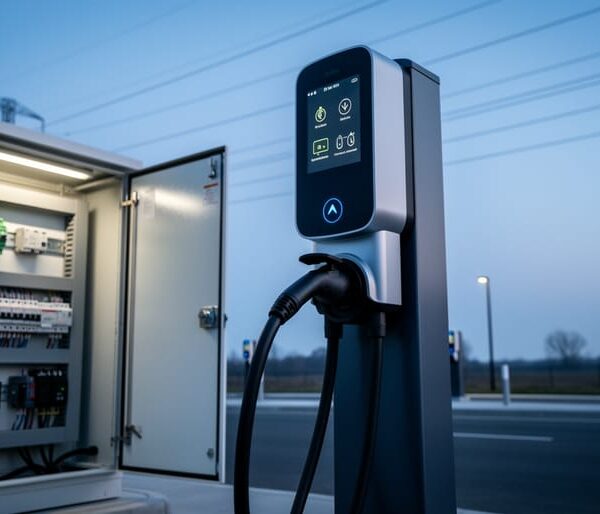
Electric vehicle challenges encompass the technical, economic, and systemic barriers that slow widespread EV adoption, from inadequate charging infrastructure and grid capacity constraints to supply chain vulnerabilities and affordability gaps. These obstacles don’t exist in isolation. They interact across manufacturing, policy, and consumer behavior in ways that determine whether regions can meet their electrification goals or fall years behind.
Understanding these challenges matters because the transition to electric mobility represents one of the largest infrastructure overhauls in modern history. Industry professionals and policymakers face mounting pressure to deliver charging networks that scale with demand, secure battery material supply chains against geopolitical shocks, and close the price gap between electric and conventional vehicles. Vehicle manufacturers navigate production bottlenecks while investors assess which technologies will prove viable beyond the pilot phase. The stakes are high: research centers estimate that delays in addressing core infrastructure challenges could push decarbonization targets back by a decade or more.
This article categorizes EV challenges into four key domains: infrastructure readiness, supply chain security, economic accessibility, and grid integration. Each section examines how specific barriers manifest in real-world deployment, why they persist despite significant investment, and what solutions are emerging from current field trials and policy frameworks. You’ll find evidence-based analysis of charging deserts in rural corridors, battery material bottlenecks affecting production timelines, and the grid modernization requirements that utilities are racing to implement. The goal is not to catalog problems but to equip you with a clear view of where progress is actually happening and where critical gaps remain unaddressed.
Understanding EV Infrastructure Challenges
EV infrastructure challenges encompass the systemic barriers that impede the deployment, accessibility, and effectiveness of charging networks needed to support widespread electric vehicle adoption. These challenges span multiple dimensions: technical constraints like grid capacity and charging speed limitations, economic hurdles including high capital costs and uncertain return-on-investment timelines, regulatory complexities from fragmented permitting processes and inconsistent standards, and social factors such as unequal access across income levels and geographic regions. Unlike isolated technical problems with straightforward engineering fixes, infrastructure challenges are interconnected obstacles that require coordinated solutions across utilities, governments, automakers, charging providers, and end users.
Understanding these challenges matters because infrastructure deployment pace directly determines EV adoption rates. A vehicle owner cannot switch to electric mobility if reliable charging remains inaccessible at home, at work, or along travel routes. Infrastructure gaps create range anxiety, extend charging times beyond practical limits for many users, and concentrate EV ownership among affluent homeowners with private garages while excluding renters and urban residents. For fleet operators, inadequate charging infrastructure translates to operational downtime and route limitations that undermine the total cost of ownership advantages electric vehicles otherwise offer.
The stakes extend beyond individual convenience. Governments worldwide have set ambitious targets for phasing out internal combustion engines, but those timelines become unrealistic if charging infrastructure lags behind vehicle sales. Grid operators face the challenge of integrating millions of new electrical loads without triggering capacity shortfalls or requiring prohibitively expensive system upgrades. Energy providers must balance peak demand from vehicle charging against renewable generation patterns that do not always align with when drivers plug in. Solving infrastructure challenges is not ancillary to electromobility, it is the foundation that determines whether the transition succeeds or stalls.
How EV Infrastructure Challenges Manifest
Grid Capacity and Energy Demand
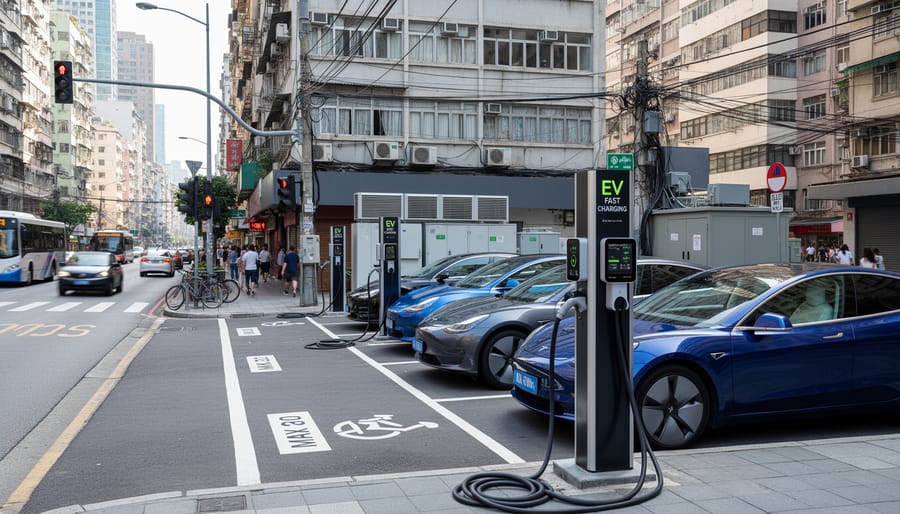
As EV adoption accelerates, local distribution grids face compounding stress from simultaneous charging events, particularly when drivers return home from work and plug in during early evening hours. A single residential Level 2 charger draws roughly 7 kilowatts, comparable to adding another household’s worth of demand to a neighborhood transformer designed decades ago for lower loads. When multiple EVs charge at once on the same circuit, transformers can overheat, cables exceed thermal limits, and voltage drops ripple through the local network.
The challenge intensifies in areas with high EV penetration, where peak demand from EV charging can coincide with existing grid peaks, forcing utilities to bring expensive peaking plants online or curtail supply. Distribution infrastructure upgrades lag adoption curves, creating bottlenecks that slow charging network deployment and raise costs. Multi-unit dwellings amplify the problem: a single parking garage with dozens of chargers can overload service panels unless managed through load balancing or staged charging schedules, adding complexity that many building owners struggle to navigate.
Geographic and Accessibility Gaps
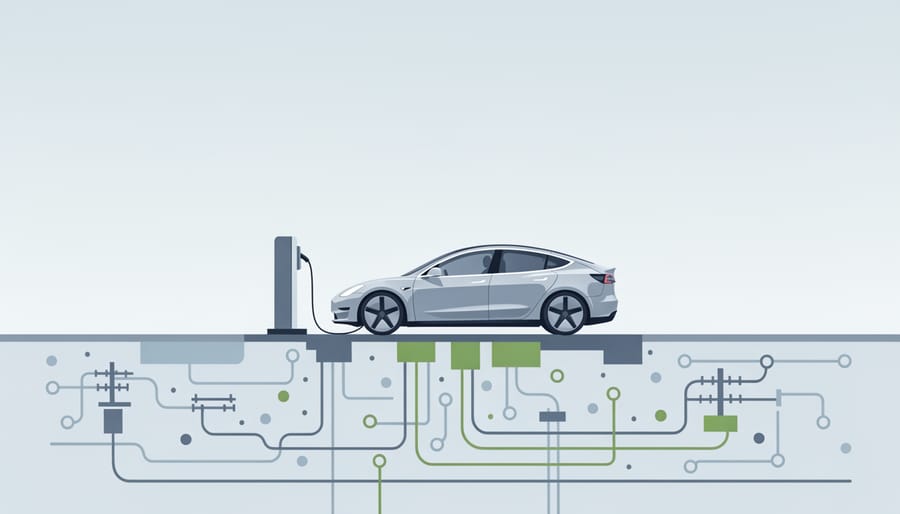
Geographic disparities create some of the most persistent barriers to EV adoption. While urban centers often enjoy a growing network of public chargers, rural and suburban areas face rural charging infrastructure access gaps that leave residents with few options beyond home charging, if they have a garage or dedicated parking spot at all.
Multi-unit dwellings present a different challenge. Apartment residents and condo owners typically lack the authority or electrical capacity to install personal chargers, and building owners face complex permitting, shared electrical infrastructure limitations, and unclear cost-recovery mechanisms. This creates an equity problem: renters and lower-income households, who stand to benefit most from EV operating cost savings, often cannot charge conveniently at home.
Underserved communities compound these issues. Lower-income neighborhoods see slower infrastructure deployment due to perceived lower purchasing power and higher installation costs in aging electrical grids. Indigenous communities, rural towns, and regions without strong advocacy or investment pipelines remain on the periphery of charging networks, perpetuating a two-tier system where EV ownership becomes practical only for those with means and location advantages.

Interoperability and Standardization
Multiple competing charging connectors and payment networks turn a simple task, plugging in your vehicle, into a puzzle. In North America alone, drivers navigate CCS, Tesla’s NACS, and legacy CHAdeMO plugs, while Europe uses different pin configurations. This fragmentation forces network operators to install multiple plug types at each station, inflating infrastructure costs and slowing deployment.
Payment systems compound the problem. Some chargers require dedicated apps, others accept contactless cards, and interoperability between networks remains inconsistent. A driver crossing state lines might need five different accounts to complete a single trip. Industry research shows that charging standardization improves experience significantly by eliminating this friction, though full harmonization remains years away. The result: slower adoption as potential buyers weigh convenience concerns against vehicle benefits.
Types of EV Infrastructure Challenges
Technical and Engineering Challenges
Charging speed remains a primary technical barrier, with most public chargers delivering 50-150 kW while gasoline refueling takes minutes. Even emerging 350 kW ultra-fast chargers require 15-30 minutes for meaningful range recovery, creating queue bottlenecks at peak times. Battery thermal management systems must balance charging speed against cell degradation, limiting practical charging rates below theoretical maximums.
Connector fragmentation complicates the landscape. North America juggles CCS, CHAdeMO, and Tesla’s proprietary NACS standard, forcing network operators to install multiple cables or risk excluding vehicle segments. Europe has largely standardized on CCS Type 2, yet legacy vehicles and imported models still create compatibility gaps at charging stations.
Grid integration presents systemic challenges. Simultaneous fast charging at multiple stalls can spike demand beyond local distribution capacity, requiring expensive transformer upgrades and load management systems. Unmanaged charging coincides with evening peak demand, stressing grids already constrained during summer cooling or winter heating periods.
Smart charging infrastructure lags behind vehicle capabilities. Many existing stations lack bidirectional communication protocols needed for dynamic load balancing, demand response participation, or vehicle-to-grid services. Outdated charging management software cannot coordinate with grid operators or optimize charging schedules based on renewable energy availability and real-time pricing signals.
Economic and Investment Challenges
The economics of EV charging infrastructure create formidable barriers to deployment. Building a single DC fast-charging station costs between $150,000 and $300,000, while Level 2 stations run $5,000 to $50,000 depending on complexity and site preparation. These upfront investments face uncertain payback periods, often exceeding seven years, as utilization rates remain unpredictable, particularly in emerging markets or rural corridors.
Business model viability remains contested. Most public charging operators struggle with profitability, caught between low utilization during the network’s growth phase and competitive pressure to keep pricing attractive. Revenue per charger varies wildly by location and charging speed, making it difficult to build investment cases that satisfy traditional infrastructure finance requirements.
Funding gaps persist despite government incentives. Private capital hesitates without clear demand signals, while public funding alone cannot scale networks at the pace required. The chicken-and-egg dynamic, drivers want chargers before buying EVs, investors want EV sales before funding chargers, creates deployment paralysis. Multi-unit dwellings face particularly acute challenges, as property owners lack incentives to shoulder installation costs for tenant benefits, leaving millions without home charging access.
Regulatory and Policy Challenges
Regulatory frameworks for EV charging infrastructure remain fragmented across jurisdictions, creating significant deployment barriers. Permitting processes for charging station installation often require navigating multiple agencies with inconsistent requirements, delaying projects by months and increasing costs. Utility rate structures designed for traditional electricity consumption patterns don’t accommodate the unique load profiles of fast-charging stations, making business cases difficult to justify. Some regions impose demand charges that penalize the intermittent, high-power draws characteristic of DC fast charging, while others lack clear rules for third-party charging operators to access grid connections. Cross-border standardization presents additional complexity, particularly in regions like Europe and North America where drivers cross jurisdictions regularly. Incompatible connector requirements, payment systems, and safety standards force charging network operators to customize infrastructure for each market, limiting economies of scale and slowing network expansion.
User Experience and Behavioral Challenges
Even as charging networks expand, psychological and practical barriers shape how drivers interact with EV infrastructure. Range anxiety persists despite improving battery technology, particularly among drivers accustomed to petrol station ubiquity and five-minute refueling. The perception that charging takes “too long” discourages adoption, even when most daily driving fits within overnight home charging patterns.
Payment fragmentation creates genuine friction: drivers often need multiple apps and accounts to access different charging networks, with varying pricing structures and authentication methods that complicate what should be a simple transaction. Network reliability concerns compound these issues, drivers report anxiety about finding broken chargers or occupied stations without real-time availability information. These behavioral challenges require solutions that prioritize user experience, transparent pricing, seamless payment interoperability, and dependable network uptime monitoring to build the confidence that sustains widespread EV adoption.
Real-World Applications and Use Cases
Urban Charging Networks
Cities face a perfect storm of infrastructure challenges: millions of residents rely on street parking, apartment buildings rarely offer charging access, and local electrical grids weren’t designed for thousands of EVs drawing power simultaneously. Installing public chargers requires securing limited curb space, negotiating with multiple city departments, and upgrading transformers that may already run near capacity during peak hours.
Dense urban areas also create equity concerns. Affluent neighborhoods often see faster charging deployment because property owners can invest in equipment and local grids have more headroom. Meanwhile, lower-income districts and older housing stock struggle with both funding and electrical capacity. Some cities respond by mandating charging requirements in new construction and retrofitting streetlights with integrated chargers, but scaling these solutions demands coordination between utilities, municipal planners, and private operators, a slow process when permit backlogs stretch months and every installation requires custom engineering.
Highway and Corridor Charging
Long-distance EV travel exposes persistent infrastructure gaps that undermine driver confidence and limit market growth. Highway corridors require fast-charging stations spaced at predictable intervals, typically every 50 to 80 miles, yet coverage remains patchy outside major routes, particularly in rural regions and secondary highways.
Fast-charging network development faces several hurdles. High power demands strain local grid connections, often requiring costly utility upgrades. Site acquisition along highways proves difficult due to land availability, zoning restrictions, and competition with existing fuel retailers. Capital intensity remains substantial: a single 150-350 kW DC fast-charging station can cost $100,000 to $500,000 to install, depending on location and grid infrastructure.
Unreliable uptime compounds these problems. Studies show that 20-30% of fast-charging stations experience operational issues, forcing detours that erode trust. Without consistent corridor coverage and reliable equipment, electric vehicles struggle to match the spontaneous travel flexibility that internal combustion engines enable.
Fleet and Commercial Applications
Commercial fleets face distinct infrastructure challenges shaped by operational demands. Delivery vans, buses, and work trucks typically operate on fixed routes with predictable energy needs, yet depot charging infrastructure must support simultaneous charging of multiple vehicles overnight while managing grid capacity and demand charges that can significantly inflate operating costs.
Duty cycle requirements complicate planning. A transit bus might need 300+ miles of range daily, necessitating 150kW+ charging to complete overnight turnaround. Medium and heavy-duty vehicles require dedicated high-power infrastructure, often 350kW or more, that most commercial properties weren’t designed to support. Upgrading electrical service takes months and costs hundreds of thousands of dollars per site.
Fleet operators must also coordinate charging schedules to avoid peak demand penalties while ensuring vehicles are ready for early morning departures. Unlike consumer charging, commercial applications have zero tolerance for downtime, a non-functional charger means a vehicle can’t operate, directly impacting revenue.
Residential and Multi-Unit Dwellings
Home charging remains the preferred method for most EV owners, yet millions of potential adopters lack this option. Approximately 40% of U.S. households live in multi-unit dwellings where installing charging infrastructure requires landlord approval, shared electrical infrastructure upgrades, and coordination among multiple stakeholders. Property owners face uncertain return on investment, unclear responsibility for maintenance costs, and complex electrical permitting processes.
The equity dimension grows starker in lower-income neighborhoods where older buildings lack adequate electrical capacity and landlords have limited capital for upgrades. Renters typically cannot authorize installations even when willing to pay, creating a two-tier system where homeowners enjoy convenient overnight charging while apartment residents depend entirely on scarce public infrastructure. This access gap directly correlates with slower EV adoption rates in urban centers and among historically underserved communities, undermining the transition’s inclusive potential.
Current Developments Addressing EV Infrastructure Challenges
Technological Solutions
Ultra-fast charging stations delivering 350 kW or more can replenish 80% of battery capacity in under 20 minutes, directly addressing range anxiety and enabling long-distance travel comparable to conventional refueling. These high-power systems require liquid-cooled cables and robust grid connections, but they eliminate the primary user objection to EV adoption.
Wireless inductive charging embeds power transfer pads in parking spaces or roadways, removing the need for physical connectors. While currently limited to lower power levels, this technology suits fleet vehicles that return to depots and urban taxi services operating on fixed routes.
Battery swapping stations exchange depleted packs for fully charged units in three to five minutes. This approach works best in controlled fleets with standardized battery designs, though cross-manufacturer compatibility remains elusive outside pilot programs.
Vehicle-to-grid (V2G) technology transforms parked EVs into distributed energy storage, feeding electricity back to the grid during peak demand periods. This bidirectional flow stabilizes renewable energy integration and generates revenue for vehicle owners, though it requires smart inverters and regulatory frameworks that recognize EVs as grid assets.
Smart charging systems coordinate when vehicles draw power, shifting demand to off-peak hours when electricity costs less and grid capacity exceeds load, thereby avoiding infrastructure upgrades.
Policy and Regulatory Progress
Governments worldwide are streamlining permitting processes and harmonizing technical standards to reduce deployment friction. The European Union’s Alternative Fuels Infrastructure Regulation mandates minimum charging coverage along major corridors, while setting interoperability requirements that eliminate payment system fragmentation. Several U.S. states have adopted unified connector standards and reciprocal charging agreements, cutting the regulatory complexity that previously delayed network expansion.
Incentive structures are evolving beyond direct subsidies. Tax credits now target charging equipment installation in underserved communities, and some jurisdictions offer density bonuses for developers who include EV infrastructure in new construction. Utility commissions are approving time-of-use rates that encourage off-peak charging, addressing grid stress while lowering user costs.
Public-private partnerships are accelerating build-out in challenging markets. In these models, governments provide land access and streamlined approvals while private operators finance and manage charging networks. This risk-sharing approach has proven effective in rural corridors and low-income neighborhoods where purely commercial deployment remains unprofitable. Collaborative frameworks between utilities, automakers, and charging providers are establishing shared data protocols that improve grid management and user experience simultaneously.
Business Model Innovation
New business models are emerging to overcome the financial and operational barriers that have historically slowed charging network deployment. Charging-as-a-Service (CaaS) shifts infrastructure costs from site hosts to specialized operators who install, maintain, and manage chargers in exchange for revenue sharing or subscription fees. This arrangement reduces upfront investment requirements for businesses and property owners while ensuring professional network management.
Energy management platforms integrate charging operations with grid services, creating dual revenue streams. These systems optimize charging schedules based on electricity prices, coordinate demand response programs, and enable vehicle-to-grid services where EVs provide grid stability during peak periods. Fleet operators increasingly adopt managed charging solutions that bundle hardware, software, and energy procurement into single contracts with predictable costs.
Innovative financing mechanisms are also expanding access to infrastructure capital. Green bonds specifically targeting charging projects, infrastructure-as-a-service models with monthly payments rather than capital outlays, and utility-sponsored programs that spread costs across ratepayers are making deployment more financially viable across diverse locations and use cases.
Common Questions About EV Infrastructure Challenges
The transition to electric mobility raises practical questions for everyone involved in infrastructure development and deployment. These concerns span technical feasibility, economic viability, and user experience dimensions that shape investment decisions and adoption rates.
What is the biggest bottleneck in EV infrastructure expansion?
Grid capacity constraints represent the primary bottleneck, as utility infrastructure in many regions was designed for different load patterns and lacks the capacity to support widespread fast charging without significant upgrades. This creates both technical challenges and regulatory complexity around cost allocation for necessary improvements.
How long does it realistically take to build out adequate charging infrastructure?
Infrastructure development timelines vary dramatically by location and regulatory environment, ranging from 18 months for straightforward installations to 5+ years for projects requiring major grid upgrades, permitting approvals, and utility coordination. The variability stems from local permitting processes, interconnection queues, and the extent of necessary electrical infrastructure modifications.
Can existing electrical grids handle mass EV adoption without major upgrades?
Most grids require strategic upgrades rather than complete overhauls, with smart charging management and demand response systems reducing the need for capacity expansion. However, concentrated fast-charging hubs and fleet depots typically necessitate targeted distribution network reinforcement to handle peak loads safely.
Why hasn’t standardization solved interoperability problems yet?
Standardization efforts face competing regional approaches, legacy equipment investments, and ongoing technological evolution that complicates universal adoption. Different markets prioritized different connector types and communication protocols before international coordination matured, creating path dependencies that take years to resolve through equipment replacement cycles.
Industry professionals frequently grapple with return-on-investment calculations that depend on uncertain adoption curves and evolving technology. The capital intensity of charging infrastructure means investors need confidence in utilization rates, yet those rates depend partly on infrastructure availability, creating a coordination problem. Fleet operators face distinct challenges around depot charging capacity and the electrical service upgrades required to support overnight charging for multiple vehicles simultaneously.
Policymakers struggle with equitable access questions, particularly regarding charging availability in rental properties, apartment buildings, and lower-income communities where residents lack dedicated parking. The regulatory framework around utility involvement in charging infrastructure remains contested, balancing the benefits of utility investment capacity against competitive market concerns. These questions reflect genuine tensions in the infrastructure development process rather than simple technical problems awaiting straightforward solutions.
Types or components
EV infrastructure challenges consist of interconnected technical, economic, regulatory, and social components that together shape the deployment landscape. The technical layer encompasses grid capacity, charging technology standards, energy management systems, and equipment reliability. These engineering elements determine what’s physically possible and at what speed infrastructure can be deployed.
The economic component includes capital investment requirements, operational costs, revenue models, and return timelines. Infrastructure viability depends on solving the cost equation for private operators, utilities, and public agencies alike.
The regulatory framework comprises permitting processes, building codes, utility rate structures, interconnection rules, and cross-jurisdictional standards. These policies either enable or constrain deployment speed and efficiency.
Finally, the user experience dimension integrates payment systems, network reliability, charging speed, location convenience, and information accessibility. This component directly affects adoption rates and determines whether infrastructure meets real-world needs. Each component influences the others, regulatory delays raise costs, poor user experience reduces utilization, and technical limitations constrain business models.
The transition to zero-emission mobility faces formidable infrastructure barriers, yet the convergence of technological innovation, policy commitment, and cross-sector collaboration is creating tangible momentum. Grid capacity constraints, geographic accessibility gaps, and standardization challenges remain significant obstacles, but they’re increasingly met with coordinated responses rather than fragmented efforts.
What sets the current moment apart is the recognition that infrastructure challenges aren’t purely technical problems requiring engineering fixes. They’re systemic issues demanding integrated solutions spanning utility regulation reform, equitable deployment strategies, innovative financing mechanisms, and user-centered design. Cities piloting smart charging systems, utilities adapting rate structures, and manufacturers aligning on interoperable standards demonstrate how multi-stakeholder cooperation translates into measurable progress.
The path forward requires sustained commitment across three dimensions. First, continued investment in research that identifies emerging bottlenecks before they calcify into structural barriers. Second, policy frameworks that harmonize regulations, incentivize private capital, and prioritize underserved communities in infrastructure rollouts. Third, transparent data sharing and open collaboration between vehicle manufacturers, charging providers, utilities, and government agencies to accelerate solution deployment.
EV infrastructure challenges aren’t disappearing, but they’re becoming increasingly addressable as stakeholders shift from working in silos to orchestrating comprehensive responses. The timeline for achieving ubiquitous, reliable charging networks depends less on technological breakthroughs than on the speed and quality of this collaborative transformation.