
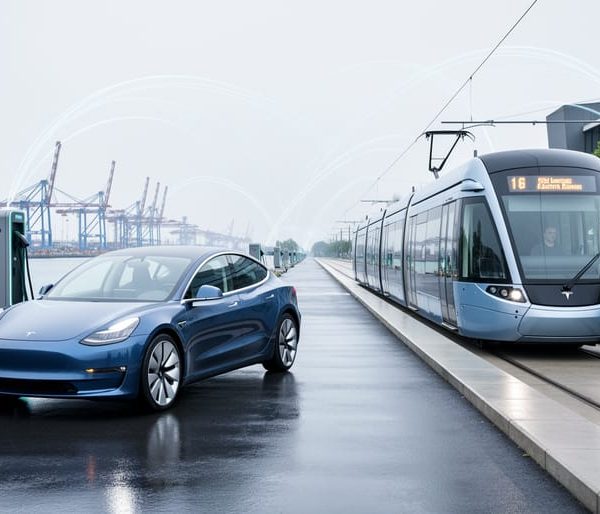
International collaboration serves as the backbone of progress in zero-emission mobility, enabling countries and organizations to pool resources, share breakthrough research, and accelerate deployment of clean transport solutions at a scale no single nation can achieve alone. By combining expertise across borders, international cooperation frameworks transform isolated research efforts into coordinated movements that compress decades of development into years.
The mechanics are straightforward but powerful. Research institutions in multiple countries align their work around shared priorities, whether battery chemistry advances, hydrogen infrastructure standards, or lifecycle emissions methodologies. Governments create bilateral agreements that harmonize regulations and testing protocols. Industry consortia establish common technical specifications that reduce market fragmentation. Each partner contributes distinct strengths: Norwegian expertise in maritime electrification, German precision in manufacturing standards, Chinese scale in battery production, American innovation in software integration.
What distinguishes successful international collaboration from well-intentioned failures? Three elements prove essential. First, clear governance structures with defined decision-making authority prevent partnerships from dissolving into endless discussion. Second, equitable benefit-sharing ensures that developing economies gain technology transfer and capacity building, not just secondary roles in data collection. Third, sustained funding commitments outlast election cycles and budget pressures.
The results speak for themselves. Collaborative frameworks have accelerated lithium-ion cost reductions by 89% since 2010, standardized fast-charging protocols across continents, and created shared emissions databases that inform policy worldwide. As zero-emission mobility enters its critical deployment phase in 2026, understanding how to design, join, and maximize these partnerships becomes essential for any organization serious about climate impact.
Why International Collaboration Matters for Sustainable Transport
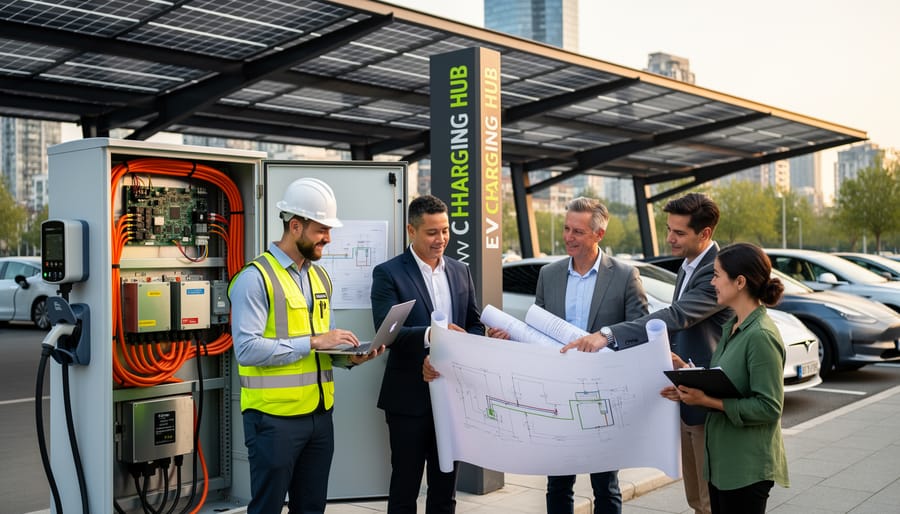
The transition to zero-emission mobility confronts every nation with challenges that dwarf individual capacity. Climate targets set ambitious deadlines, many countries aim for net-zero transport by 2050, yet no single government, manufacturer, or research institution controls all the pieces needed to get there. Battery chemistry breakthroughs happening in South Korean labs need European charging infrastructure to make them practical. Regulatory frameworks developed in California influence vehicle standards globally, but only if other jurisdictions adopt compatible approaches. This interconnected reality makes international team collaboration not just beneficial but essential for meaningful progress.
Technology standardization illustrates why isolated efforts fall short. When each region develops proprietary charging connectors, payment systems, or safety protocols, manufacturers face fragmented markets that increase costs and slow adoption. Consumers suffer too: an electric vehicle that works seamlessly in Germany might struggle to find compatible fast chargers across the border. Collaborative standards development pools technical expertise from diverse contexts, ensuring solutions work across different grid systems, climates, and use cases rather than optimizing for narrow local conditions.
The infrastructure gap presents another dimension where collaboration proves critical. Building comprehensive charging networks requires massive capital investment, yet utilization rates in early markets often don’t justify standalone business cases. When countries coordinate infrastructure planning and share deployment models, they compress the learning curve. Norway’s experience with incentive structures informs policy in the Netherlands; China’s urban charging solutions adapt to Indian cities. This knowledge transfer prevents redundant trial-and-error cycles, saving years and billions in duplicated experimentation.
Policy harmonization amplifies these benefits further. When technical regulations diverge significantly between markets, manufacturers must produce multiple vehicle variants, inflating costs that ultimately reach consumers. Collaborative policy development creates larger addressable markets for zero-emission vehicles, improving economics that attract private investment. More importantly, aligned policies send consistent market signals that give manufacturers confidence to commit to long-term electrification strategies rather than hedging across multiple technology pathways.
The multiplier effect becomes most visible in research investment. A collaborative project pooling resources from ten countries can tackle complex battery recycling challenges or next-generation fuel cell development at scales impossible for individual nations. Shared data sets grow richer, computational models become more robust, and breakthrough findings propagate faster across borders. This acceleration matters because the climate clock doesn’t pause for sequential national research programs to each reinvent solutions.
Key Models of International Collaboration in Electromobility
Research Networks and Knowledge-Sharing Platforms
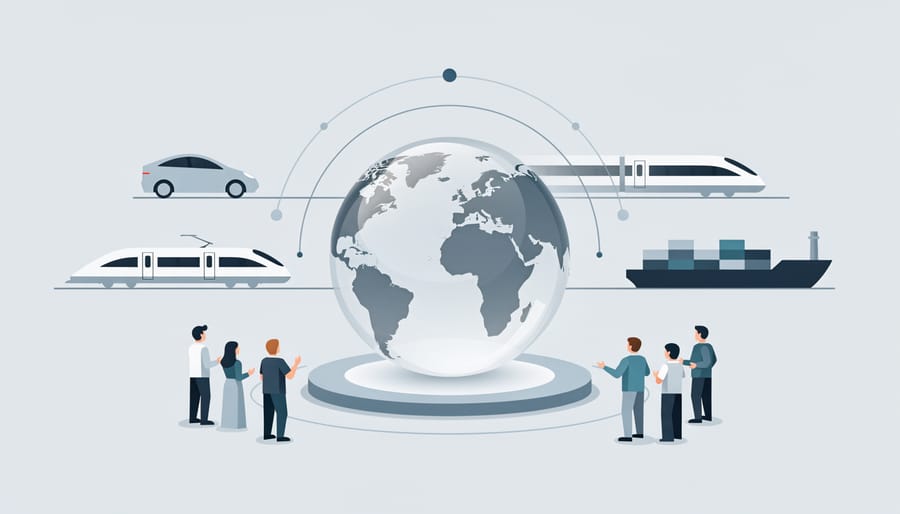
Research networks and knowledge-sharing platforms represent the intellectual backbone of international collaboration in electromobility. Unlike formal consortia bound by legal agreements or commercial objectives, these platforms thrive on voluntary participation and open exchange. Academic institutions from Boston to Beijing, government research laboratories, and corporate R&D teams connect through digital repositories, joint publications, and coordinated studies that accelerate progress no single entity could achieve alone.
The mechanics are straightforward but powerful. A research team in Germany develops a novel silicon-anode battery chemistry. Rather than keeping findings proprietary until patent filing, they share preliminary data through an international platform. Teams in South Korea and California build on this work, testing the chemistry under different climate conditions and vehicle applications. Within eighteen months, what began as one lab’s breakthrough evolves into a validated technology pathway with real-world performance data across three continents.
Charging infrastructure research demonstrates similar network effects. Norwegian researchers studying fast-charging impacts on grid stability share load profile data with counterparts in Texas facing similar challenges at different scales. Japanese teams contribute vehicle-to-grid integration findings. The collective dataset, impossible for any single institution to generate, enables modeling tools that infrastructure planners worldwide now use to design resilient charging networks.
These platforms succeed because they address a fundamental tension in electromobility research: the need for proprietary competitive advantage balanced against shared interest in sectoral progress. By focusing on pre-competitive research, foundational science, testing methodologies, baseline performance data, networks create common ground where collaboration yields mutual benefit. Individual institutions still compete on specific applications and products, but they build from a stronger, collectively-developed knowledge base that raises the entire field’s capability level.
Multi-Stakeholder Policy Advocacy

Multi-stakeholder platforms create powerful channels for shaping electromobility policy precisely because they combine perspectives that lawmakers need but rarely find in one place. When NGOs advocating for climate action sit alongside vehicle manufacturers concerned with implementation timelines and technical experts who understand infrastructure requirements, the resulting policy recommendations carry weight that single-interest lobbying cannot match.
These coalitions work by establishing shared goals, typically emissions reduction targets or infrastructure deployment milestones, then crafting policy frameworks that balance environmental ambition with technical feasibility and economic viability. A manufacturer might flag supply chain constraints that affect battery production timelines, while an environmental organization ensures those constraints don’t become excuses for delaying targets. Technical experts arbitrate with data, preventing debates from devolving into ideological standoffs.
The key mechanism is evidence synthesis: these platforms aggregate research findings, pilot program results, and real-world implementation data from multiple countries into coherent policy briefs that legislators can actually use. Rather than lawmakers receiving contradictory recommendations from competing interests, they get unified guidance showing how policies can achieve environmental goals while remaining implementable.
Political independence becomes the platform’s greatest asset. By maintaining arm’s-length relationships with government bodies and transparent funding structures, these organizations preserve credibility as honest brokers. When industry voices speak through such platforms rather than directly lobbying, their input gets heard as expertise rather than dismissed as self-interest.
International alignment happens through parallel advocacy: platforms operating in different countries coordinate messaging, ensuring that neighboring nations adopt compatible standards for vehicle certification, charging infrastructure, and grid integration. This coordination prevents the fragmented regulatory landscape that has historically slowed technology adoption across borders.
Industry Consortia and Standards Development
Standards development represents one of the most tangible forms of international collaboration in electromobility, directly enabling vehicles and infrastructure from different manufacturers and countries to work together. When a Belgian driver can charge their Japanese-built electric vehicle at a German charging station using the same connector and payment system, that convenience results from years of coordinated standardization work.
Industry consortia bring together competitors who normally vie for market share but recognize that fragmentation harms everyone. Organizations like CharIN coordinate manufacturers from across continents to develop charging standards such as the Combined Charging System, now adopted in North America, Europe, and increasingly Asia. These groups tackle technical specifications, voltage levels, communication protocols, connector designs, that must be universally compatible while leaving room for competitive differentiation in user experience and service quality.
The process requires balancing competing priorities. Vehicle manufacturers want standards that showcase their technology strengths. Charging operators need protocols that work with existing infrastructure investments. National regulators insist on safety requirements that reflect their jurisdictions. Effective consortia create governance structures where decisions emerge from technical merit rather than political leverage, often using independent testing and transparent documentation to validate proposals.
Beyond charging, standardization extends to battery safety testing, vehicle-to-grid communication, and cybersecurity protocols. The International Electrotechnical Commission coordinates these efforts globally, ensuring that regional standards, whether European, Chinese, or American, maintain baseline interoperability. This collaborative standardization work prevents the balkanization that plagued early mobile phone networks and accelerates adoption by giving consumers confidence that their vehicle investment will function anywhere.
The Bioenergy Task 39 Model: A Case Study in Effective Collaboration
Bioenergy Task 39 demonstrates how structured international collaboration transforms fragmented efforts into coordinated progress. Operating as a global network since 2011, this IEA Technology Collaboration Programme connects researchers, manufacturers, policy advisors, and fleet operators across 14 countries to advance zero-emission mobility through bioenergy and electrification pathways.
The organization’s network approach differs fundamentally from traditional top-down structures. Rather than centralizing decision-making, Task 39 functions as a facilitation platform where expertise flows horizontally between members. National teams contribute specialized knowledge, Swedish researchers might share battery integration findings while German partners provide grid infrastructure data, creating a repository that benefits all participants. This distributed model ensures no single country’s perspective dominates while leveraging diverse technical capabilities and market contexts.
Task 39 maintains scientific credibility through rigorous methodology standards applied consistently across its work. All technical analyses undergo peer review by independent experts before publication. When the network published its lifecycle assessment comparing biofuel and battery-electric heavy vehicles, the methodology documentation included detailed assumptions, data sources, and sensitivity analyses that allowed external validation. This transparency builds trust with policy makers who need defensible evidence rather than advocacy disguised as research.
Several factors enable Task 39’s effectiveness across diverse stakeholders:
- Engagement spans the full value chain, from component suppliers to end users, preventing solutions that work theoretically but fail practically
- Evidence-based advocacy uses peer-reviewed research to inform recommendations, maintaining a clear separation between findings and interpretations
- Storytelling translates technical complexity into accessible narratives that resonate with non-specialist audiences without sacrificing accuracy
- Independence from political pressure, achieved through IEA affiliation and balanced national representation, protects objectivity when findings challenge established positions
The organization balances policy influence with scientific objectivity by distinguishing between research outcomes and recommendations. Technical reports present findings neutrally, battery cost trajectories, charging infrastructure requirements, emissions reductions, then separate policy implications sections translate these into actionable guidance for legislators. When Task 39 briefed European Parliament members on commercial vehicle electrification, they presented implementation challenges alongside opportunities, acknowledging trade-offs rather than promoting a predetermined agenda.
This credibility proves essential when mediating between competing interests. Vehicle manufacturers want ambitious targets that drive market transformation; NGOs push for aggressive timelines; policy makers need achievable milestones. Task 39 facilitates dialogue by providing neutral ground where stakeholders debate pathways using shared data rather than conflicting assumptions. The network doesn’t resolve every disagreement, but it establishes common factual baselines that focus discussions on genuine trade-offs rather than information gaps.
Task 39’s model shows that effective international collaboration requires deliberate structural choices: distributed governance that respects national contexts, methodological rigor that withstands scrutiny, and facilitation skills that bridge technical and policy worlds without compromising either.
Overcoming Barriers to International Collaboration
Navigating Regulatory and Political Differences
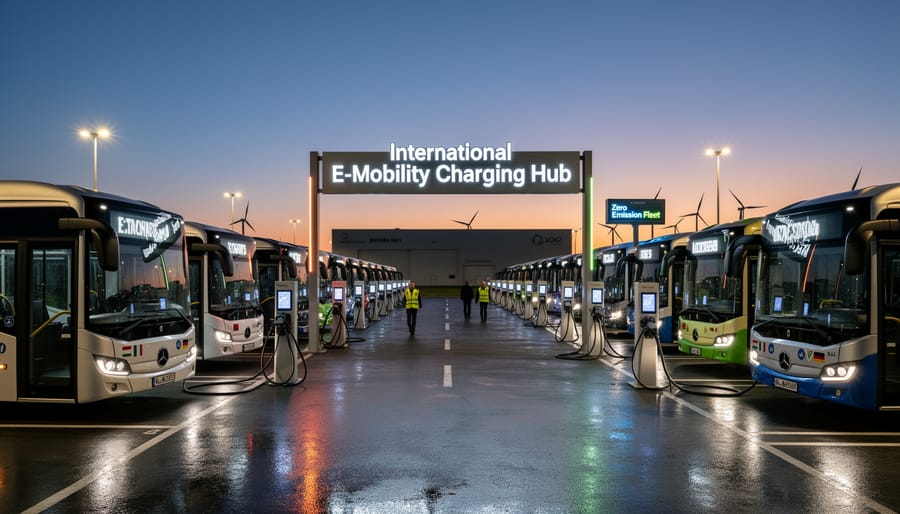
Successful international collaboration requires diplomatic agility when partners operate under fundamentally different regulatory systems and political imperatives. A charging infrastructure project involving European, Asian, and North American stakeholders must reconcile the EU’s stringent safety directives with more flexible frameworks in certain Asian markets, while navigating protectionist trade policies that restrict cross-border technology transfer.
Effective collaborators establish shared baseline standards that satisfy the strictest requirements among participating nations, then allow localized adaptation where regulations diverge. This “floor, not ceiling” approach maintains technical integrity without forcing unrealistic uniformity. Research networks typically define minimum data collection protocols, verification methods, and safety thresholds that all partners agree to meet, regardless of what their domestic law requires.
Political shifts present ongoing challenges. When a new government deprioritizes electromobility or imposes sudden policy reversals, collaborative projects buffer the impact through institutional continuity and diversified funding. Organizations like Bioenergy Task 39 maintain momentum by anchoring work in scientific evidence rather than political narratives, ensuring that research findings remain credible across changing administrations.
Transparent governance structures prove essential. Projects with clearly defined decision-making processes, documented conflict resolution mechanisms, and rotating leadership prevent any single nation’s agenda from dominating. Regular stakeholder convenings, held in rotating countries, build personal relationships that outlast policy turbulence, transforming formal partnerships into resilient professional networks that adapt rather than collapse when national priorities shift.
Ensuring Equitable Participation and Resource Sharing
Funding asymmetries create structural barriers before collaboration even begins. When research grants, technical assistance programs, and infrastructure projects flow primarily from wealthy nations, they risk embedding assumptions about market conditions, consumer behavior, and regulatory capacity that don’t translate to different contexts. A charging network architecture optimized for European grid reliability may prove impractical in regions with frequent power interruptions, yet if the funding originates entirely from European sources, the design reflects that limited perspective.
Effective partnerships establish shared governance from inception. Rather than casting developing nations as recipients of predetermined solutions, successful collaborations position all participants as co-designers. This means allocating decision-making authority proportional to stake in outcomes, not proportional to financial contribution. Organizations that rotate leadership roles, hold meetings across time zones and geographies, and require consensus from diverse stakeholder groups produce solutions with broader applicability.
Technical capacity building must accompany every collaborative project. Training programs, technology transfer agreements, and intentional knowledge-sharing mechanisms ensure that expertise doesn’t remain concentrated in well-resourced institutions. When a Brazilian research team gains the equipment and training to conduct battery lifecycle studies independently, the global knowledge base expands beyond what any single entity could produce.
Addressing these imbalances requires deliberate structural choices: multi-currency funding pools, tiered membership fees based on national income, translation services as standard practice, and explicit representation quotas. These aren’t bureaucratic obstacles but prerequisites for collaboration that actually serves global mobility transformation.
Maintaining Scientific Credibility While Influencing Policy
Organizations navigating the policy space face a constant tension: how to advocate for change without compromising the objectivity that gives their voice authority. The most effective international collaborations anchor every policy recommendation in peer-reviewed research, transparent methodologies, and data that external experts can validate. Publishing findings before entering policy discussions establishes credibility independent of any advocacy position.
Transparency mechanisms matter. Leading networks document their funding sources, disclose potential conflicts, and open their technical working groups to observers from diverse sectors. When Bioenergy Task 39 presents policy guidance, it explicitly distinguishes between research findings, what the data shows, and strategic recommendations based on interpreting those findings through stakeholder input.
Multi-stakeholder governance structures provide natural checks against bias. When industry representatives, academics, NGOs, and technical experts all contribute to shaping recommendations, the resulting positions reflect evidence rather than any single interest. This process takes longer but produces policy proposals that regulators and legislators can trust, even when they challenge existing frameworks or economic interests.
Future Directions for International Collaboration in Zero-Emission Mobility
As zero-emission mobility matures from early adoption into mainstream deployment, the scope and structure of international collaboration must evolve to address increasingly complex challenges that span entire value chains and economic systems.
Supply chain sustainability represents the next frontier for collaborative action. While early international partnerships focused on vehicle technology and charging infrastructure, attention now shifts to the ethical sourcing of critical minerals, labor conditions in battery manufacturing, and the carbon footprint of production processes across multiple continents. Effective collaboration will require transparency frameworks that track materials from extraction through assembly, with partnerships connecting mining operations in lithium-producing regions, battery manufacturers in Asia, vehicle assemblers in Europe and North America, and end-market regulators. The automotive industry cannot achieve genuine sustainability if collaboration stops at the vehicle’s tailpipe.
Circular economy principles demand new collaborative models that treat end-of-life as a design consideration rather than an afterthought. International partnerships are beginning to address battery recycling infrastructure, standardized disassembly protocols, and second-life applications for degraded battery packs. These efforts require coordination between vehicle manufacturers who design products, waste management systems that collect them, recycling facilities that process them, and regulatory bodies that set recovery targets. Countries with established recycling capabilities can share methodologies with emerging markets now deploying their first wave of electric vehicles, preventing the waste management crises that plagued earlier technology transitions.
Emerging markets present both opportunity and obligation for international collaboration. As electric vehicle adoption accelerates in Africa, Southeast Asia, and Latin America, partnerships must ensure these regions access appropriate technologies rather than inheriting discarded models from developed markets. Successful collaboration means adapting charging infrastructure to local grid conditions, developing financing mechanisms suited to different economic contexts, and building local manufacturing and maintenance capacity. The goal is equitable technology transfer that creates sustainable industries rather than dependency.
Integration with broader energy system transitions represents perhaps the most critical expansion of collaborative scope. Electric vehicles function as mobile storage within electricity grids, creating opportunities for demand response and renewable energy integration that no vehicle manufacturer or utility can realize alone. International partnerships increasingly connect transport and energy sectors, developing vehicle-to-grid protocols, coordinating charging with renewable generation patterns, and aligning investment in charging infrastructure with grid modernization programs. As these systems grow more interconnected, collaboration must span not just borders but also traditional industry boundaries.
Frequently Asked Questions
How can my organization join an international collaboration initiative?
Start by identifying networks aligned with your expertise and goals, such as research consortia, standards bodies, or policy advocacy groups. Most established collaborations have public membership criteria and application processes, reach out directly to network coordinators, attend relevant conferences, and demonstrate how your organization’s capabilities complement existing efforts.
Who typically funds international collaboration projects in electromobility?
Funding typically comes from multiple sources: national research agencies, European Union programs like Horizon Europe, industry membership fees, and occasionally philanthropic foundations. Many successful collaborations use a hybrid model where participating organizations contribute both financial resources and in-kind contributions like research time, data access, or testing facilities.
How are intellectual property rights handled in collaborative research?
Most collaborations establish clear IP agreements upfront, often using models where background knowledge remains with the contributing party while foreground knowledge (new discoveries) is shared among partners with terms for commercialization. The specific approach varies, but transparency and early agreement on ownership, licensing, and publication rights prevent conflicts later.
What metrics indicate a collaboration is actually effective?
Look beyond published papers to tangible outcomes: adoption of recommendations into policy, implementation of shared standards across multiple countries, joint patents filed, and measurable progress toward stated sustainability targets. Effective collaborations also show sustained engagement from diverse stakeholders over time, not just initial enthusiasm that fades.
Can competitors genuinely collaborate without undermining their market positions?
Yes, when the scope is clearly defined around pre-competitive areas like safety standards, charging interoperability, or fundamental research where shared progress benefits everyone. The key is separating collaborative work on foundational challenges from competitive differentiation in product design, customer experience, and market strategy.
How do you balance national interests with global collaboration goals?
Successful collaborations acknowledge that countries have different priorities and timelines while focusing on shared objectives that transcend borders, like reducing emissions and advancing technology. Transparent governance structures, rotating leadership roles, and ensuring all voices are heard help navigate competing interests while maintaining progress toward collective goals.
These questions reflect concerns that arise repeatedly when organizations consider participating in international partnerships. The practical reality is that collaboration requires deliberate structure, clear agreements, and consistent effort, but the returns justify the investment.
Organizations often hesitate because they worry about losing competitive advantage or getting entangled in bureaucratic processes. The most effective approach is to start small: participate in a working group, contribute to a specific research project, or attend collaboration meetings as an observer before committing fully. This allows you to assess whether the collaboration’s culture, governance, and objectives align with your organization’s values and capabilities.
For smaller organizations or those from emerging markets, finding the right entry point matters enormously. Rather than attempting to join every possible network, focus on areas where you can contribute unique expertise, regional insights, or testing capabilities that larger players lack. Many collaborations actively seek diverse perspectives to avoid solutions that only work in specific contexts. Your participation becomes valuable not despite differences but because of them.
The distinction between effective and ineffective collaboration often comes down to execution discipline. Collaborations that succeed set measurable milestones, maintain regular communication, designate clear responsibilities, and celebrate incremental progress. Those that falter typically suffer from vague objectives, inconsistent engagement, or power imbalances where a few dominant voices drown out others. Before committing resources, examine the collaboration’s track record, governance structure, and how decisions are made. If the answers are unclear or unsatisfying, that tells you something important.
The transition to zero-emission mobility cannot succeed as a patchwork of isolated national efforts. International collaboration is the essential mechanism through which the sector will overcome its most stubborn barriers: the technical challenges of next-generation battery chemistries, the infrastructure gaps that limit cross-border travel, the policy inconsistencies that fragment markets, and the investment risks that slow deployment in emerging economies.
Every stakeholder across the electromobility ecosystem has both the opportunity and the responsibility to engage in collaborative networks. Manufacturers benefit from shared standards that expand their addressable markets. Research institutions amplify their impact when findings inform policy across multiple jurisdictions. Policy makers craft more effective regulations when they draw on global evidence rather than narrow national contexts. NGOs and advocacy organizations gain credibility through partnerships that ground their recommendations in rigorous, internationally validated data.
The examples throughout this article demonstrate that collaboration works best when structured deliberately: clear governance, balanced representation, transparent methodologies, and a commitment to shared goals over individual advantage. Organizations like Bioenergy Task 39 show how maintaining scientific integrity while actively engaging with policy makers creates trusted platforms that influence real-world outcomes.
As the sector matures, the nature of collaboration will evolve. Early-stage questions about technical feasibility are giving way to complex system-integration challenges that span energy grids, urban planning, supply chain ethics, and circular material flows. These problems demand even broader partnerships that connect domains previously seen as separate.
The pathway forward is clear: stakeholders who actively participate in international networks, contribute their expertise transparently, and prioritize collective progress will shape a zero-emission mobility future that arrives faster and serves more people equitably than any nation could achieve alone. The work is already underway. The question is not whether to collaborate, but how deeply to commit.