

Media storytelling is the strategic use of narrative techniques across broadcast, digital, and print platforms to communicate complex information, build audience connection, and drive meaningful action. Rather than presenting raw data or policy prescriptions in isolation, media storytelling structures information around human experiences, relatable challenges, and evidence-based solutions that resonate with specific audiences.
For advocacy professionals and policy communicators working in 2026, the stakes have never been higher. Audiences face unprecedented information overload, algorithmic fragmentation, and declining trust in institutional messaging. A well-constructed narrative can cut through this noise by transforming abstract policy debates into tangible stories that stakeholders remember and share. Research consistently shows that people process and retain narrative information more effectively than statistical arguments alone, and that emotionally resonant stories paired with credible evidence generate stronger engagement and behavior change than either element in isolation.
This explainer breaks down how media storytelling works in practice, the specific narrative frameworks that prove most effective across different platforms, and how organizations can apply these techniques while maintaining scientific integrity and political independence. Whether you’re designing a campaign to accelerate clean energy adoption, communicating research findings to policymakers, or explaining regulatory changes to industry stakeholders, understanding the mechanics of narrative construction makes the difference between messages that fade and those that catalyze action.
The sections ahead define the core components of media storytelling, examine the psychological and structural mechanisms that make narratives persuasive, categorize proven approaches for different communication goals, and provide concrete strategies for integrating storytelling into evidence-based advocacy work.
What Media Storytelling Means in Policy Advocacy

Media storytelling in policy advocacy is the deliberate practice of converting technical research and data into narratives that non-specialist audiences can understand, remember, and act upon. In the context of sustainable mobility, this means transforming battery chemistry studies, lifecycle emissions analyses, and charging infrastructure datasets into stories that illustrate why these findings matter for real communities, economies, and climate goals. The objective is not entertainment but persuasion grounded in evidence, making complex electromobility research accessible to legislators drafting transport policy, manufacturers evaluating production shifts, and citizens deciding whether to support zero-emission initiatives.
This approach differs fundamentally from entertainment storytelling. While novelists and filmmakers prioritize emotional engagement and narrative tension, advocacy storytelling starts with verified data and maintains fidelity to scientific findings throughout. A campaign explaining the health benefits of reduced urban emissions cannot exaggerate pollution figures or cherry-pick favorable studies. The credibility of organizations working in zero-emission transport depends on this accuracy. When Bioenergy Task 39 presents renewable fuel pathways to policymakers, the narrative must reflect genuine technical trade-offs, not a simplified sales pitch.
- Narrative Framing
- The strategic selection of perspective, context, and emphasis when presenting research findings to shape how audiences interpret evidence without distorting the underlying facts.
- Data Storytelling
- The practice of combining statistical analysis with visual design and narrative structure to make quantitative research comprehensible and actionable for decision-makers.
- Stakeholder Engagement
- Tailoring communication approaches to address the specific priorities, knowledge levels, and decision criteria of distinct audience groups such as policymakers, industry leaders, or advocacy organizations.
- Science Communication
- The field focused on conveying technical and research content to non-expert audiences while preserving accuracy, acknowledging uncertainty, and avoiding oversimplification.
Effective media storytelling in this domain requires collaboration between researchers who understand the technical nuances and communicators who know how to construct narratives that resonate. A study showing cost parity between electric and combustion vehicles becomes a story about municipal fleet managers reducing budgets while meeting climate commitments. Emissions data transforms into a narrative about children breathing cleaner air near schools. The facts remain unchanged, but the framing makes them relevant to the people who can drive policy change.
How Media Storytelling Works in Sustainable Mobility
The Research-to-Narrative Pipeline
The research-to-narrative pipeline begins with source identification. Advocacy teams scan peer-reviewed journals, government datasets, industry reports, and white papers from credible institutions. For electromobility, this means tracking publications from transport ministries, energy research labs, and vehicle testing facilities. Each source undergoes scrutiny: Who funded the study? What methodology was used? Have findings been replicated or cited by other researchers?
Once vetted, technical findings move to translators, communication specialists who work directly with the original researchers. This collaboration is critical. A researcher might present lifecycle emissions data across seventeen vehicle categories with statistical confidence intervals. The communicator asks: What’s the single most important finding for policymakers? What does this mean for a city planning charging infrastructure? The researcher ensures any simplification remains factually sound.
The translation phase strips jargon without losing precision. “Battery energy density increased 15% year-over-year” becomes “modern EV batteries now store 15% more power in the same space, extending range without adding weight.” Numbers stay exact. Context gets added. Implications become clear.
Draft narratives return to researchers for validation. They flag oversimplifications, correct misinterpretations, and often suggest better analogies drawn from the data itself. This back-and-forth continues until both accuracy and accessibility are achieved.
The final narrative includes transparent sourcing. Readers can trace claims back to original research, maintaining the credibility that separates evidence-based advocacy from promotional content. This pipeline transforms complex studies into policy-ready stories without sacrificing the scientific rigor that makes them persuasive.
Balancing Scientific Integrity with Engagement
The tension between scientific accuracy and audience engagement requires careful navigation. Unlike purely academic scientific communication media storytelling for policy advocacy must resonate emotionally without distorting the underlying data. The key is selecting the right level of detail rather than dumbing down the content. For electromobility topics, this means explaining battery chemistry concepts through real-world analogies while preserving the technical precision that gives the narrative credibility.
Fact-checking protocols become non-negotiable when translating research into public narratives. Every statistic, every projected outcome, and every comparative claim must trace back to peer-reviewed sources or verified datasets. Organizations maintain this rigor by establishing review processes where both subject matter experts and communications professionals validate content before publication. The expert ensures accuracy, while the communicator confirms accessibility.
Transparency builds trust. When uncertainties exist in the research, such as long-term battery degradation rates or infrastructure cost projections, effective storytelling acknowledges these limitations rather than presenting convenient certainties. This honesty actually strengthens advocacy messages because it demonstrates that the narrative rests on evidence, not wishful thinking. Policymakers and industry stakeholders recognize when data has been cherry-picked versus when it represents a balanced assessment of available research.
Forms of Media Storytelling in Electromobility Advocacy
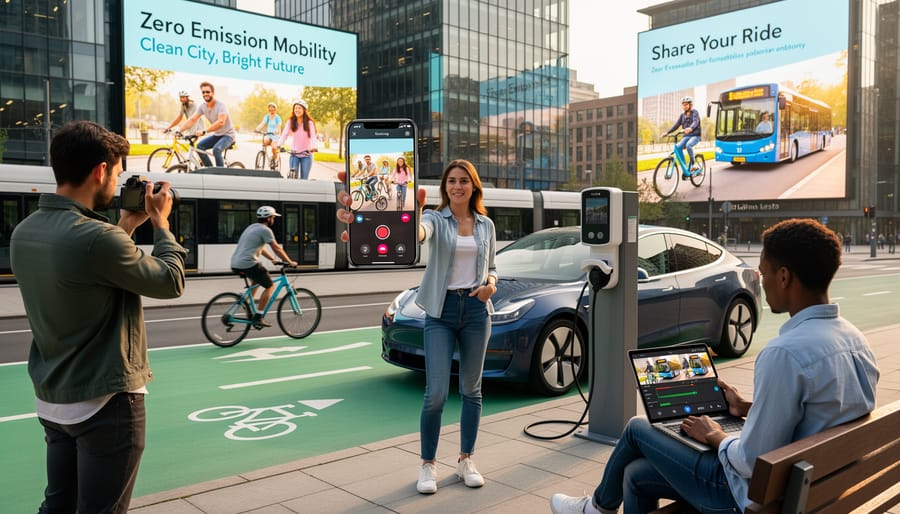
Data-Driven Storytelling
Data-driven storytelling transforms sprawling datasets, emission reductions, charging station deployments, total cost of ownership comparisons, into visuals that audiences grasp at a glance. Infographics distill multi-year trends into a single graphic showing how electrification cuts transport emissions, while interactive dashboards let policymakers manipulate variables like subsidy levels or grid capacity to see projected outcomes. When advocacy groups present EV infrastructure challenges a color-coded map showing charger density versus population centers communicates gaps more persuasively than a spreadsheet. Cost-benefit analyses come alive through animated timelines that contrast upfront vehicle prices with fuel savings over a decade, helping end users and fleet managers visualize financial trade-offs. The key is choosing the right format for each dataset: heatmaps for geographic disparities, bar charts for comparative performance, and scenario sliders for policy modeling. Well-executed data storytelling doesn’t oversimplify; it reveals patterns and implications that raw numbers obscure, making technical evidence accessible without sacrificing accuracy.
Human-Centered Narratives
Human-centered narratives transform technical achievements into relatable experiences by spotlighting real people affected by sustainable transport. User testimonials capture the daily reality of EV adoption, the fleet manager who reduced operating costs by 40%, the rural commuter overcoming range anxiety, the delivery company converting its entire vehicle line. These firsthand accounts validate policy recommendations through lived experience rather than abstract projections.
Industry innovator profiles serve a complementary function. Profiling the engineer who developed a breakthrough battery chemistry or the entrepreneur scaling charging infrastructure in underserved areas demonstrates that sustainable mobility advances through human ingenuity. These narratives inspire stakeholders while illustrating technical possibilities in accessible terms.
Community impact stories show collective transformation. A town shifting its public transit to zero-emission buses becomes more than emissions data, it’s improved air quality measured in reduced childhood asthma rates, quieter streets enhancing quality of life, and local jobs created through infrastructure deployment. By centering narratives on people rather than technology alone, advocates make policy benefits tangible and urgent, connecting legislative decisions to human outcomes policymakers can’t dismiss as theoretical.
Comparative and Scenario-Based Stories
Comparative storytelling puts competing futures side by side, letting audiences see the stakes of policy choices in concrete terms. A before-and-after narrative might contrast a city’s air quality and public health outcomes before implementing a zero-emission zone with measurable improvements two years later, real hospital admission data, particulate matter readings, business activity shifts. These tangible results make abstract benefits visible.
Scenario-based stories project forward. What happens if a national government accelerates EV incentives versus maintaining current subsidies? Present two parallel timelines: one shows charging infrastructure gaps widening, adoption plateauing, and emissions targets missed; the other demonstrates expanded networks, declining battery costs through scale, and met climate commitments. Use credible modeling, not speculation.
Comparative analyses work across jurisdictions. Norway’s EV adoption trajectory versus a similarly developed nation that delayed policy action reveals how regulatory timing shapes outcomes. Show the economic, environmental, and infrastructure differences that emerged from different starting points.
These formats help policymakers and stakeholders grasp trade-offs. They answer “what if we don’t act?” without resorting to alarmism, grounding consequences in evidence. The most effective comparative stories acknowledge uncertainties and variables rather than presenting oversimplified predictions, maintaining the credibility that makes them persuasive.
How Media Storytelling Is Applied Across Stakeholder Groups
Influencing Policy Through Legislative Storytelling

Legislative storytelling transforms raw policy data into narratives that legislators can champion. The core technique is evidence packaging: distilling comprehensive research into digestible briefing formats that highlight three elements simultaneously, the problem magnitude, the proposed solution’s mechanism, and measurable outcomes. For electromobility advocacy, this means presenting charging infrastructure gaps not as abstract statistics but as constituency-level stories showing how specific districts lack coverage, paired with cost-benefit projections for local investment.
Constituent stories provide the human dimension legislators need to justify votes. A manufacturing worker retraining for EV battery production or a rural community benefiting from electric bus routes makes abstract policy tangible. These narratives work because they provide political cover, legislators can cite real people when explaining their positions, not just technical reports.
Economic impact framing recontextualizes environmental goals as fiscal opportunities. Rather than leading with emissions reductions, effective legislative stories emphasize job creation in battery manufacturing, tax revenue from charging networks, or healthcare cost savings from reduced air pollution. The narrative structure matters: start with economic benefits, then connect them to sustainability outcomes.
Maintaining neutrality while supporting specific policies requires framing advocacy around evidence thresholds rather than ideological positions. Present comparative scenarios showing multiple regulatory approaches and their projected impacts, allowing legislators to draw conclusions while ensuring the underlying data remains unimpeachable. This positions storytelling as educational support rather than partisan pressure, preserving credibility across political divides.
Engaging Industry and Research Networks
When addressing industry and research communities, storytelling shifts from persuasion to collaboration, highlighting shared challenges, breakthroughs, and competitive positioning. For manufacturers exploring zero-emission technologies, innovation narratives demonstrate how early adoption creates market differentiation. Presenting case studies of successful prototype deployments or cost reductions through scale builds confidence in emerging solutions.
Research centers benefit from narratives that connect technical findings to commercial viability. Translating laboratory results into real-world application stories helps secure funding and partnership opportunities. A global network like Bioenergy Task 39 uses storytelling to showcase cross-border research outcomes, making abstract biofuel efficiency data tangible through deployment timelines and infrastructure maps.
Within an organizational network storytelling facilitates knowledge transfer. Technical experts respond to structured problem-solution narratives that document lessons learned, avoided pitfalls, and validated methodologies. Visual process diagrams and annotated timelines make complex development cycles comprehensible across disciplines. This approach accelerates collaboration by creating common reference points, ensuring that manufacturers, academics, and engineers share not just data but context, the story of how innovation happens.
Building an Effective Media Storytelling Strategy

Developing a robust storytelling strategy requires deliberate planning, consistent execution, and willingness to adapt. Organizations in the sustainable mobility sector cannot treat storytelling as an afterthought or occasional campaign; it demands the same rigor applied to research itself.
Start by defining clear communication objectives tied to measurable policy outcomes. What specific regulatory change, funding allocation, or stakeholder behavior shift are you seeking? Your storytelling strategy should reverse-engineer from that goal. If advocating for expanded EV charging infrastructure funding, identify which decision-makers need convincing, what evidence would move them, and which narrative frames resonate with their existing priorities.
Build a content creation workflow that bridges research and communication teams. Establish regular touchpoints where scientists and communicators collaborate to identify emerging findings with storytelling potential before they become stale news. Create templates for translating technical reports into story briefs that capture the human impact, policy implications, and visual possibilities. This structured approach prevents the common disconnect where excellent research never reaches public discourse.
Distribute content strategically across channels matched to your target audiences. Policymakers may engage with LinkedIn articles and email briefings, while industry stakeholders prefer webinars and trade publications. Don’t duplicate the same content everywhere; adapt the narrative emphasis and format to each platform’s conventions. A compelling 90-second video for social media conveys different information than a detailed case study for your website.
Measure what matters beyond vanity metrics. Track not just views and shares, but also policy citations, media pickups by credible outlets, and direct engagement from decision-makers. Survey whether your target audiences recall your key messages and whether their attitudes shift after exposure. When international cooperation efforts amplify your stories through partner networks, monitor how narratives evolve as they cross borders.
Iterate based on performance data and audience feedback. If data visualization stories consistently outperform text-heavy content with your audience, invest more in visual storytelling. When certain frames generate pushback or confusion, refine your approach rather than repeating ineffective messaging.
Authenticity matters more than polish. Audiences detect manufactured narratives quickly. Share genuine challenges alongside successes, acknowledge uncertainty where it exists, and let real voices from your community tell their stories. Sustained engagement builds trust over time, making your future narratives more credible when policy windows open.
Common Questions About Media Storytelling in Advocacy
Organizations embarking on strategic storytelling often face similar concerns about balancing engagement with credibility, managing resource constraints, and demonstrating tangible impact. These questions reflect real tensions in advocacy work, where the pressure to create compelling content must align with the principles of scientific integrity and political independence that give campaigns their authority.
How do you maintain scientific credibility while making content engaging?
Ground every narrative in verified research and data, clearly attributing sources and avoiding selective interpretation. Use narrative techniques to frame and contextualize evidence, not to embellish or distort it, storytelling should illuminate facts, not replace them.
What resources are needed to implement storytelling effectively?
At minimum, you need someone who understands both your technical subject matter and audience communication, plus basic content creation tools. Many successful campaigns start with repurposing existing research reports into blog posts, social media threads, or short videos before scaling to more resource-intensive formats.
How can you measure storytelling impact on policy outcomes?
Track engagement metrics like reach and shares alongside policy-specific indicators such as stakeholder meetings secured, citations in legislative documents, and shifts in public consultation responses. While attribution is complex, consistent storytelling paired with these signals reveals influence over time.
How can smaller organizations compete with industry-funded narratives?
Leverage authenticity and specificity rather than budget, detailed case studies, transparent methodology, and community voices often resonate more powerfully than polished corporate messaging. Collaboration with research networks and NGO coalitions also amplifies reach without requiring large individual investments.
Concerns about greenwashing accusations arise frequently, particularly when discussing emerging technologies or transitional solutions. The safeguard is transparency: acknowledge limitations alongside benefits, disclose funding sources, and avoid absolute claims. When your storytelling consistently presents nuanced, evidence-based perspectives rather than promotional rhetoric, you build a reputation that insulates against credibility challenges.
Coordinating storytelling across international networks requires shared messaging frameworks that allow regional adaptation. Establish core narrative principles and key data points centrally, then empower local teams to identify culturally relevant examples and appropriate media channels. Regular alignment meetings and shared content repositories help maintain consistency while respecting the different regulatory contexts and audience priorities that shape effective advocacy in various markets.
Media storytelling in zero-emission mobility advocacy isn’t about distorting evidence or crafting appealing fiction. It’s about bridging the gap between rigorous research and the decision-makers who shape our transport future. When emission data sits in technical reports, it informs specialists. When that same data becomes a narrative showing how cleaner air reduced childhood asthma rates in a specific community, it moves policymakers to act.
The distinction matters because credibility sustains influence. Organizations that anchor their stories in verified research, transparent methodologies, and honest trade-off discussions build trust that outlasts any single campaign. This trust becomes currency in legislative debates, industry negotiations, and public discourse about sustainable transport solutions.
Effective storytelling accelerates policy adoption not by overselling benefits but by making complex systems comprehensible. It transforms battery chemistry advances into stories about affordable long-distance travel. It turns charging infrastructure statistics into narratives about rural accessibility and economic opportunity. Each story maintains scientific integrity while answering the practical questions audiences actually ask.
For advocacy professionals, the challenge is clear: integrate storytelling frameworks into your communication strategy without compromising the research rigor that gives your voice authority. Identify the human dimensions of your technical work. Find the narratives within your data. Build those stories deliberately, distribute them strategically, and measure their impact systematically. The policies shaping zero-emission transport in 2026 and beyond will be influenced not just by what the evidence shows, but by how compellingly that evidence reaches the people who matter.